How Long Do Ceiling Repairs Take?
The honest answer is that it depends, and this guide explains on what. Ceiling repair is a sequence of stages with drying time between some of them, and the length of the job is set less by how hard anyone works than by how big the area is, whether the ceiling is being re-fixed or replaced, and how long plaster takes to dry in a Perth winter versus a Perth summer. Here is what each stage involves and what tends to stretch it.
By Ceiling Fixers Perth · Updated 3 October 2026
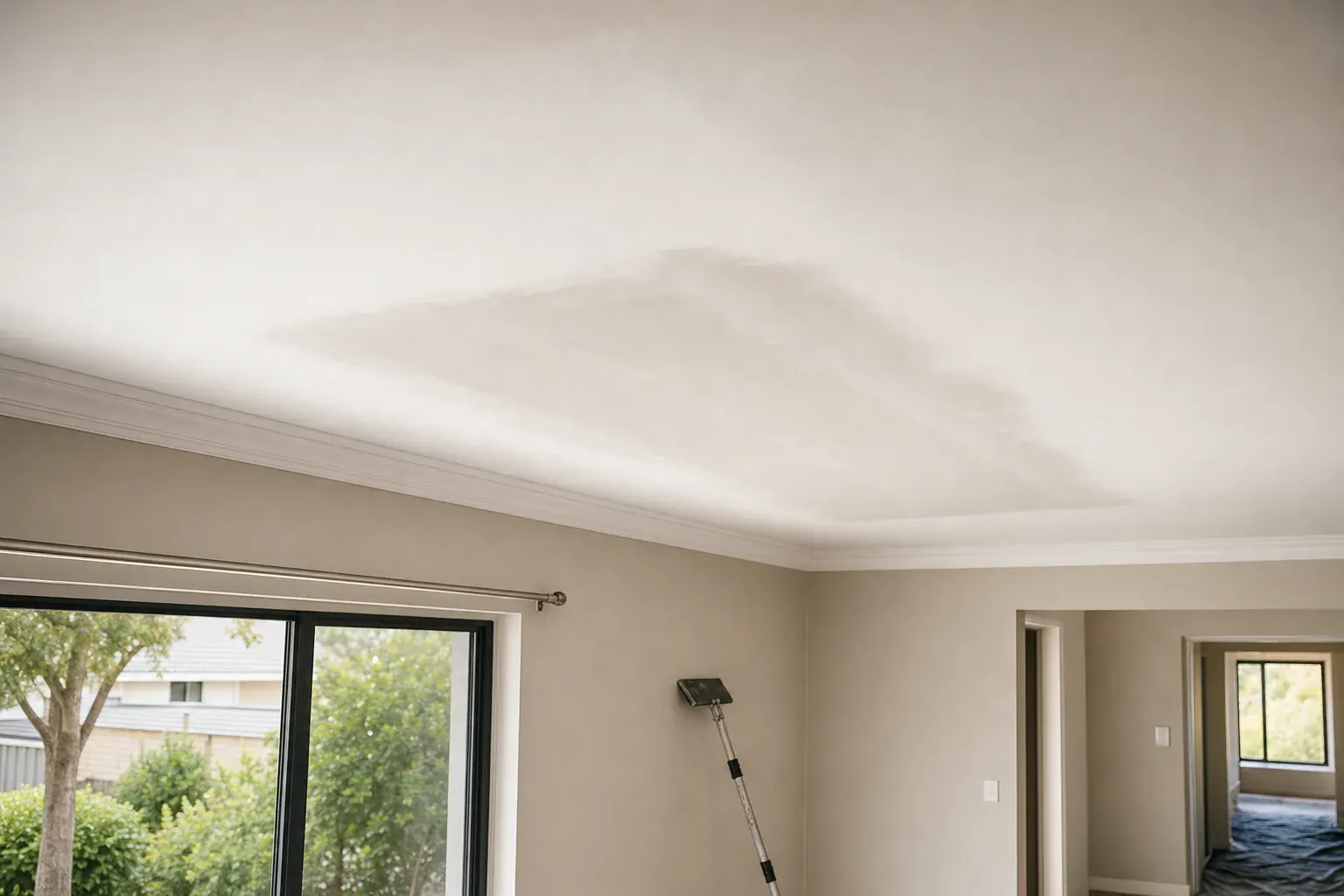
The stages of a typical repair
Almost every ceiling job runs through the same sequence. First, working out what the ceiling is made of and what has failed: often from your photos and a description, with a visit and a look in the roof space when the job calls for it. Second, a written quote based on that. Third, preparation on the day: furniture out or covered, floor protection down, fittings dealt with. Fourth, the structural work, which is re-fixing, patching or replacing the ceiling. Fifth, setting: the joins, fixings and patched areas are coated with setting plaster or joint compound, usually in more than one coat. Sixth, sanding and a final check. Then the ceiling is handed back ready for paint.
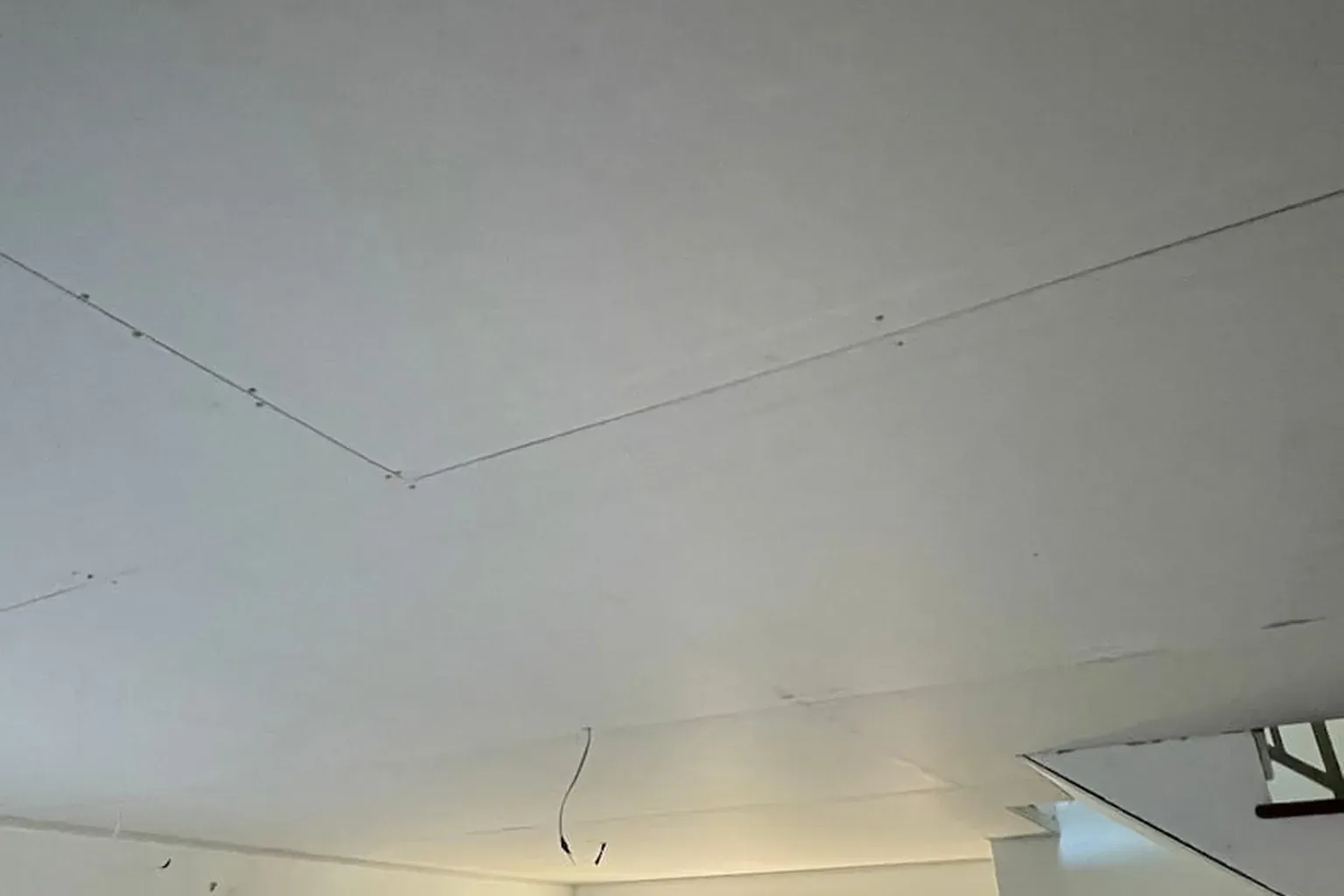
Painting is a separate step. We leave the ceiling paint-ready, meaning set, sanded and clean. The painting is done by you or a painter, and it should not start until the set coats have fully cured, which is another stretch of drying time to allow for.
Re-fix versus replace
Re-fixing a sagging plasterglass ceiling, where the sheet is sound and is pushed back up and reattached to the joists from above, is typically the quicker of the two for a single room. The structural work can often be done in a day, with setting and sanding following. Replacing a ceiling involves taking the old one down, dealing with the debris, checking and sometimes packing the joists, fixing new plasterboard, installing or refitting cornice, and then setting and sanding. That is several more steps, each with its own time, and the setting stage is larger because the whole ceiling has joins to be finished rather than a few patched areas.
Partial replacement sits in between. A water-damaged section cut out and replaced is more work than a re-fix of the same area but much less than a whole ceiling.
Drying time is the thing you cannot rush
Setting plaster and joint compound need to dry between coats, and sanding too early or putting the next coat over a damp one gives a poor finish that shows through the paint. In summer a coat can be ready for the next within a day. In a cold, wet Perth winter in a closed-up room, the same coat can take two or three days. Multiply that by the two or three coats a good finish needs and the calendar length of a job can double between January and July without anyone doing anything differently.
Water-damaged ceilings add a second drying period before any work starts. The plaster and the insulation above it have to be dry before a repair will hold, and that can be days in summer and weeks in winter. Starting the repair before that is a mistake, and a good ceiling fixer will tell you to wait.
What makes a job longer
The biggest variable is area. One bedroom is a small job; a whole single-storey house is a sequence of rooms, each with its own prep, work and setting. Cornice adds time, particularly ornate cornice that has to be matched, cast and blended, which is described in the guide on matching cornice in character homes. Access matters too: a ceiling with a clear roof space above it can be re-fixed from above; one under a flat roof, a low-pitched skillion or a second storey often cannot, and the work has to be done from below, which is slower.
Furniture and fittings slow things in small ways that add up. A room that is empty when the fixer arrives starts an hour earlier than one that has to be cleared and covered. Light fittings, fans and smoke alarms in the work area need to be disconnected and reconnected by an electrician, which means coordinating another trade. Multiple rooms can sometimes be run in parallel so that one is drying while another is being worked on, which is more efficient than doing them one after the other.
Surprises in the roof space are the last factor. Termite damage to the joists, a leak that is still live, insulation that has to come out, or a ceiling that was supposed to be re-fixed turning out to be too far gone and needing replacement, all change the scope. That is why a borderline ceiling gets a roof-space look before it is quoted, and why a quote says how surprises are handled.
- Size: one room versus a whole house
- Re-fix, partial replacement, or full replacement
- Season and drying time between coats
- Water damage needing to dry before work starts
- Cornice, especially ornate or matched profiles
- Roof-space access versus working from below
- Furniture, fittings and coordinating an electrician
- What turns up in the roof space
What a realistic timeline looks like
Without making promises about any particular job, the shape is usually this. A single-room re-fix with minor cracking is often one visit for the structural work and setting, with a return for sanding and a final coat once dry. A single-room replacement is usually about a day to get the old ceiling down and the new one up, with setting and sanding following as the coats dry, and around two days if painting is being done as well. Most jobs are finished within a week. A whole-house replacement runs longer, with rooms handed back progressively. Winter stretches all of these; summer compresses them.

Emergency make-safe work, where a dangerous section is supported or taken down, is a separate short visit, with the full repair scheduled afterwards once the room is safe and any water has dried. The sagging ceiling repair and ceiling replacement pages cover what each job involves in more detail.
How to keep it short
Have the room empty, or as empty as you can manage, before the first visit. Make sure the roof-space manhole is accessible. Get any leak fixed and let the area dry before booking the repair rather than after. Book the electrician for fittings early so the fixer is not waiting. If more than one ceiling needs doing, have them done as one job rather than in stages, because the setup and drying overlap. And ask for a paint-ready handover date rather than a start date; that is the one that matters for getting the room back.