What Ceiling Repairs Cost in Perth (and What Drives the Price)
You will not find a price on this page, and that is deliberate. Two ceilings that look identical from the sofa can be a morning's work or a week's work once someone is in the roof space, and any figure put here would be wrong for your house. A number on a page also gets anchored to: if it is low, an honest quote feels steep; if it is high, a small repair gets put off. What we can do is show you what a ceiling fixer weighs up when writing a quote, so you can read the one you are given and tell a fair one from a thin one.
By Ceiling Fixers Perth · Updated 3 October 2026

The five things that set the price
Area first. The size of the affected ceiling drives labour, materials and setting time more than anything else, and 'affected' is usually bigger than the visible damage: a sag in one corner means the straps across that whole sheet have gone; a dinner-plate stain can sit over plaster that is soft for a metre around it.
Repair versus replacement second. Re-fixing a sound sheet is a day of lifting and screwing, then setting. Replacing it means strip-out, disposal, framing checks, new board, cornice and a full set. The price follows the length of that list, and we recommend a re-screw or re-fix over a new ceiling whenever it is genuinely enough.
Ceiling material third. Plasterglass ceilings in homes built before the mid-1980s are heavier and fixed differently from plasterboard: roof-space work to re-strap, packing out when a section is replaced, and more often an ornate cornice to keep.
Access and height fourth. A standard ceiling with a clear manhole and a walkable roof space is the easy case. Raked ceilings, voids, stairwells, flat roofs with no space above and roof spaces choked with ducting all slow the work.
What is above it fifth. Insulation to lift and relay, or replace if wet. Water that has to dry first. Termite damage to the joists. Fittings an electrician has to disconnect. None of these show from the room, and each adds a line to the quote.
How a quote is built
About half of the jobs we quote are priced from photos and a description over the phone, because a straight sag in a dry room or a cracked join in plasterboard is a known quantity. The other half need a visit: the drop measured, moisture readings where there is staining, and a look in the roof space at the fixings, timber, insulation and any sign of water or termites.

Either way, the quote should be itemised: make-safe if needed, re-fix or re-strap by area, section replacement, strip-out and disposal, framing repairs, board and cornice, setting, insulation. Where the ceiling is borderline you should get repair and replacement side by side. A single number with 'ceiling repair' next to it tells you nothing about which you are buying.
How water damage changes the maths
Water is the variable that most often turns a small job into a large one, and it does so out of sight. Plaster loses its strength when soaked. A stained sheet that is dry, firm and flat is a sealing-and-painting problem. The same stain over soft plaster is a cut-out-and-replace problem, and a sheet that has been wet more than once will not hold fixings reliably even once it feels dry.
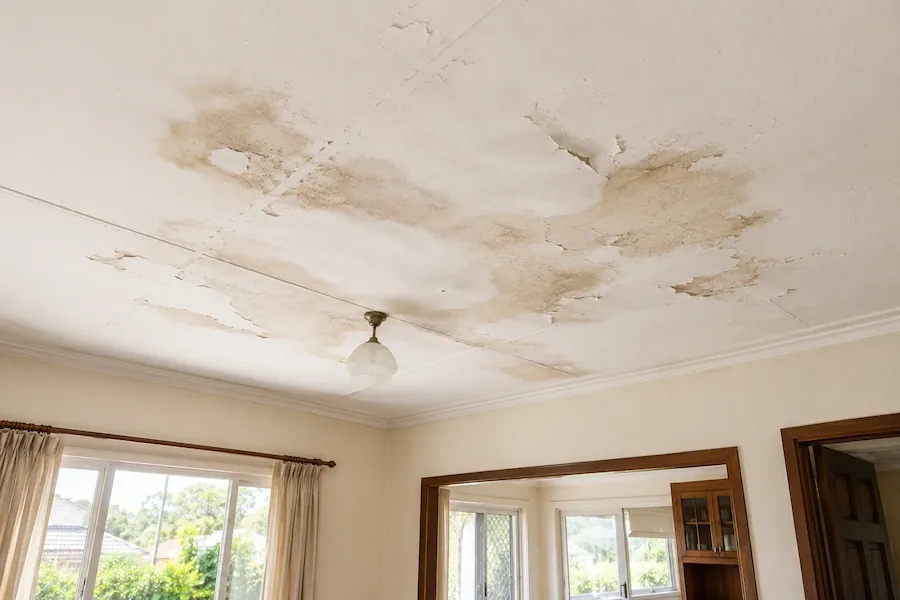
Water also brings dependencies. The leak has to be fixed by a roofer or plumber first. The plaster and insulation have to dry, days in summer and weeks in a Perth winter. Wet insulation is replaced. Mould through the board means replacement. Each is a separate line. The guide on what to do about a ceiling water stain walks through the order of operations.
Why an insurer wants a written report
After a storm, a burst pipe or another sudden event, your insurer will want more than a quote: what the ceiling was made of, what failed, why, and whether the cause was sudden or gradual, because that distinction is often what the policy turns on. A report with photos, a plain description of the failure and an itemised quote gives the assessor what they need without a second visit.
If the ceiling has come down, the first visit is a make-safe: debris cleared, the opening tarped or sealed, the rest checked. Insurers expect it as its own line, with the repair quoted and booked afterwards. What the policy covers is between you and your insurer; the guide on ceiling damage insurance claims covers what to expect.
What a photo can and cannot tell us
A photo from the doorway with the light on tells us a lot: sag or crack, roughly how big, whether there is water, how urgent. For many jobs that is enough. What it cannot show is whether the plaster behind a stain is soft, whether the straps have gone across one sheet or four, or whether the joists are sound. When the price turns on those, a figure from a photo is either padded or guessed low and revised on the day. We would rather come and look; if someone quotes a borderline ceiling without getting into the roof, treat the number as provisional.
What is included, and what is not
A ceiling fixer's quote covers the ceiling: making safe, removing or re-fixing plaster, new board, cornice, setting, sanding and clean-up, handed back paint-ready. Other things are often mistaken for part of the job and are separate trades with their own quotes, in a set order: electrician first to disconnect fittings, ceiling fixer second, painter last once the set has cured. We book them in that sequence.
- Painting: the ceiling is left set, sanded and paint-ready; the painter follows
- Electrical: lights, fans and smoke alarms are an electrician's job, booked first
- Roof and plumbing: finding and fixing the leak is a roofer or plumber, before the ceiling
- Asbestos: suspect materials are tested by an assessor and removed by a specialist
- Insulation: ask whether relaying or replacing batts is in the price
A small patch
Scope: a crack on a join, a popped line of fixings, a hole from a foot through the roof space, or a cut-out where a fitting was removed, on a ceiling that is not moving. Cut back, backed, re-taped, set and sanded, usually across two short visits. What moves the price: how many there are, whether the ceiling is textured and needs a skim, height, and whether the 'crack' turns out to be a sag.
A single-room re-strap
Scope: a plasterglass ceiling in one room that has dropped but is dry and in one piece. Propped back to the joists, strapped from the roof space, screwed off from below, joins and cornice line re-set, sanded. What moves the price: the area, how many joins open when it is lifted, insulation in the way, roof-space access, and whether the cornice needs re-bedding. Several rooms in one visit share the set-up and work out better per room than one at a time.
A water-damaged section
Scope: a stained or sagging patch under a leak that has now been fixed. Moisture readings, the soft area cut back to sound plaster, new board packed level, joins set, the kept plaster sealed, cornice repaired if wetted. What moves the price: how far the softness runs beyond the stain, whether a whole sheet is cleaner than a patch, wet insulation, mould, drying time, and any light fitting that needs an electrician.
A full-room replacement
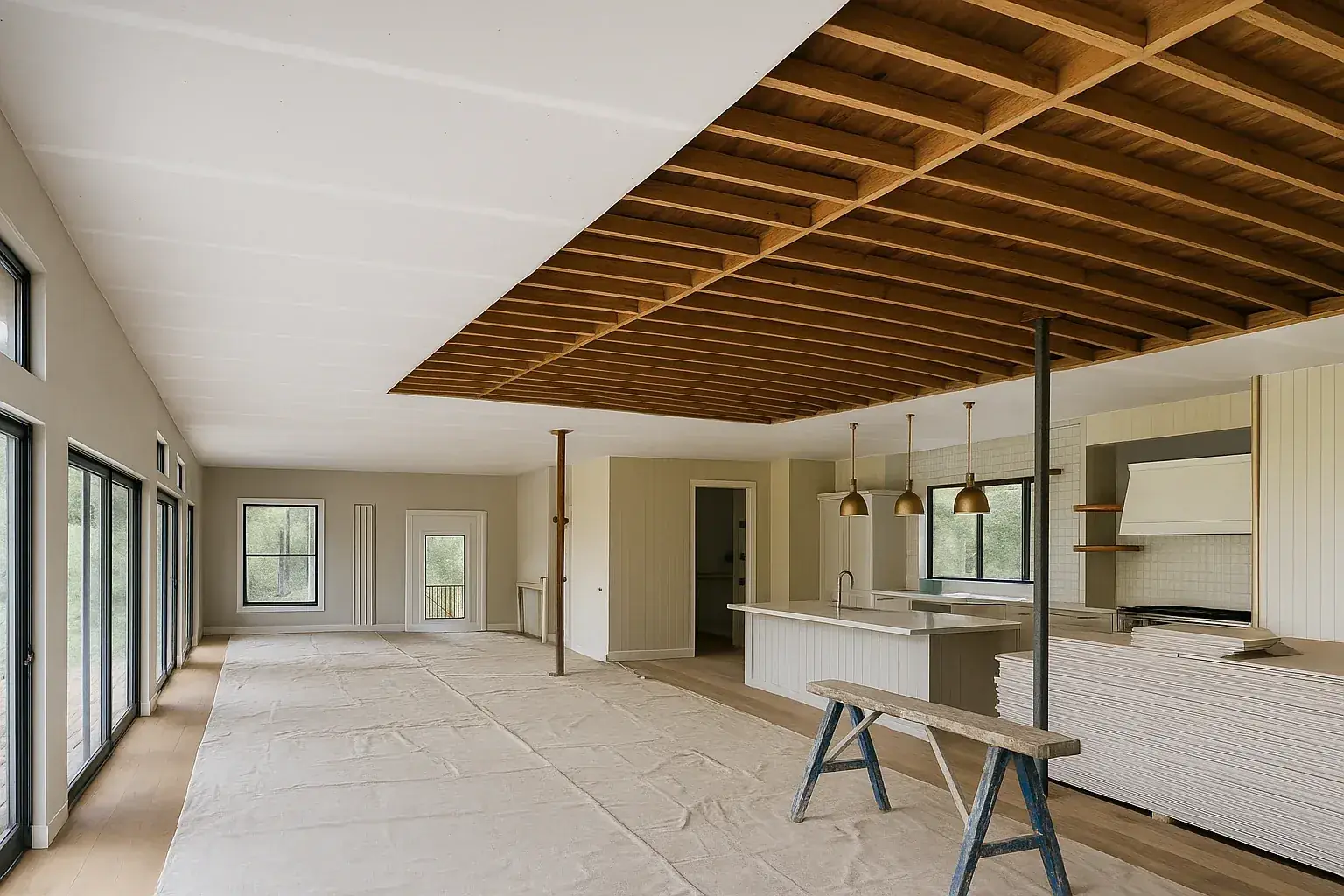
Scope: old ceiling and cornice down, debris out, insulation lifted or disposed of, joists checked, new plasterboard and cornice, every join and fixing set and sanded. For one room, old ceiling down and new one up is usually about a day, with setting and painting following, and most jobs finish inside a week. What moves the price: area and height, how much is coming down, framing repairs that only show once it is open, cornice profile, and lights and vents to cut around.
A whole house
Scope: every ceiling in an older home, replaced or a mix of re-strapping the sound rooms and replacing the ones that have gone, run as one project with rooms handed back in sequence. What moves the price: total area, how many rooms are re-strap versus replace, cornice, roof-space access that gets harder toward the middle, disposal volume, and whether you are living in it during the work. The number changes room by room, because no two ceilings in a fifty-year-old house have aged the same.
How to compare two quotes
Line them up by scope, not by total. Check both are quoting the same job: a re-fix is not comparable to a replacement. Check what each includes, particularly cornice, insulation, disposal and setting, because leaving one out makes a quote look better than it is. Check whether the roof space was looked at when the job called for it. Ask what happens if the ceiling is worse once opened, and where the ceiling job ends and the painter's begins.
We are not the cheapest ceiling fixer in Perth; our quotes are sometimes undercut by people who have not been in the roof. A lower quote that leaves the old straps alone and screws the sheet up from below is not the same repair as one that re-straps from above. It looks identical on the day it is painted; the difference shows up a few summers later. Fixing other people's shortcuts since 2003 is where that opinion comes from.