Sagging Ceiling Repair in Perth
A ceiling that has started to belly, pull away at the cornice or crack along a long curve is telling you the fixings have given up. In most Perth homes that is a plasterglass ceiling whose original glue and strapping have failed in the roof heat. We get into the roof space, re-fix it properly and bring it back flat, usually without replacing it.
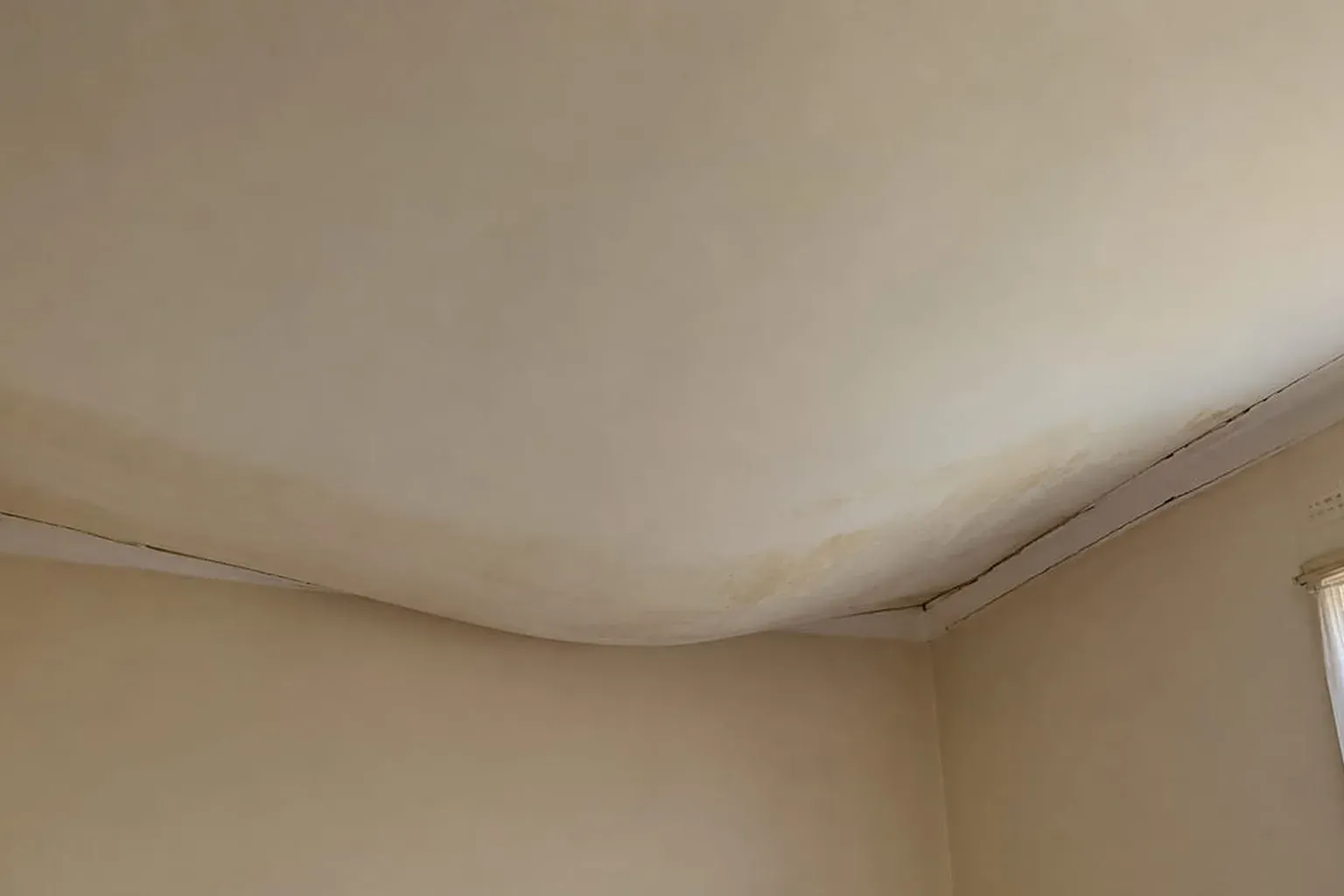
What you will usually notice first
A visible curve or belly
Stand in the doorway and sight along the ceiling toward the window. A healthy ceiling reads flat; a failing one shows a shallow dish or a drop along one edge, often worst in the middle of the largest room.
A crack tracing the cornice
When sheets drop, they tear away from the cornice first. A hairline crack that runs the length of a wall at the ceiling-to-cornice junction, or a dark shadow line opening up there, is the classic early warning.
Cracks that curve, not just straight lines
Straight cracks on sheet joins are usually cosmetic. Long curved cracks across the field of the ceiling follow the sag itself and mean the sheet is bending under its own weight.
Creaks and pops in the heat
On a 40-degree day the roof space can push past 60 degrees. Ceilings that tick, creak or pop as the house heats and cools are moving on their fixings, and movement is what finishes the glue off.
Previous patch has reopened
If a crack has been filled and painted before and is back within a year or two, the fixing underneath was never dealt with. Filler cannot hold a ceiling up.
It has dropped after works
New insulation, a ducted aircon install or a roof restoration can be the final straw for a marginal ceiling. If the sag appeared within weeks of trades being in the roof, mention it when you call.
The way the job actually gets done
We look from above before we touch anything below
The inspection starts in the roof space. We check how the sheets were originally fixed, whether the strapping has rotted or let go, what the joists are doing, and whether there is water, termite activity or something heavy sitting on the ceiling that should not be there.
Re-fixing through the face
For most plasterglass ceilings the fix is to screw the sheets back up to the joists through the ceiling face with the right fixings and washers, pulling the sag out in stages rather than forcing it in one go. The heads are then set and sanded so the ceiling reads flat again.
Re-strapping from the roof space
Where the original hessian-and-plaster straps have failed, we lay new straps over the joists from above. Combined with face fixing this restores the ceiling to a two-way hold, which is what it had when it was first built.
Honest call on repair versus replace
If a sheet has broken through, is saturated or has sagged so far it has deformed, re-fixing it is a false economy. We will tell you when a section or the whole ceiling should come down instead and quote that as a separate option.
What the work looks like
-
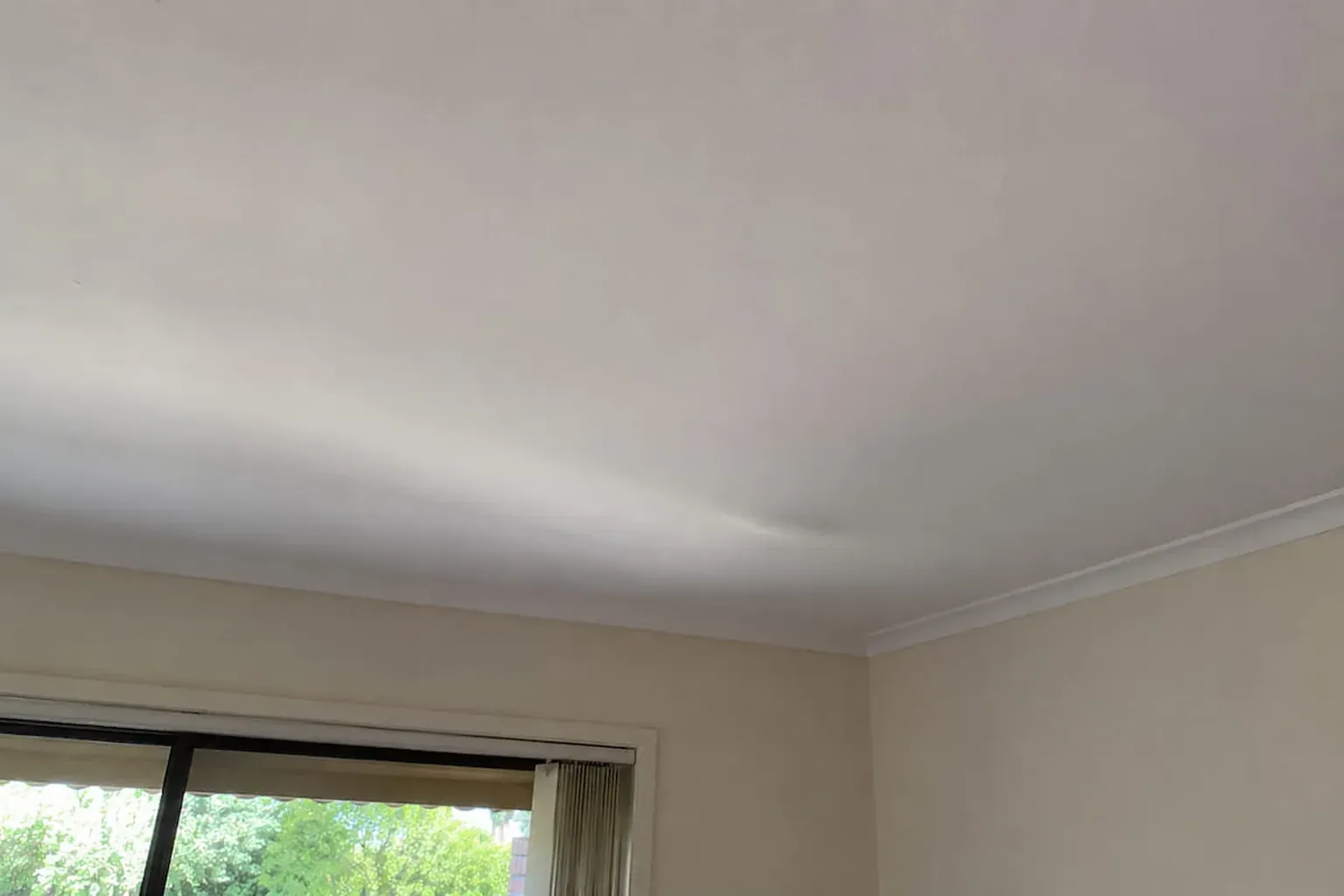
Early sag in a bedroom plasterglass ceiling, the stage where re-fixing is straightforward -
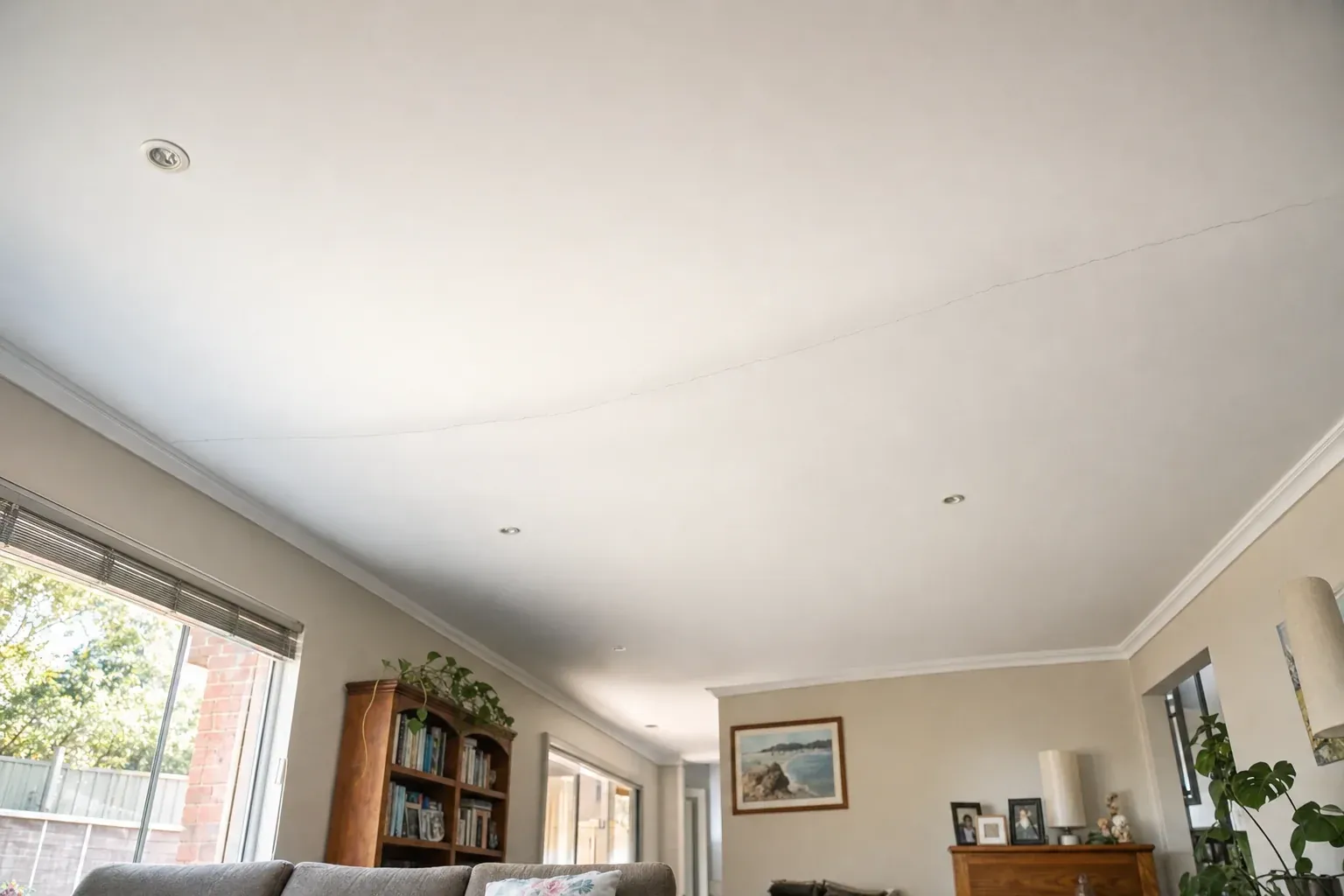
Living room ceiling with a shallow sag and a join opening up along the drop -
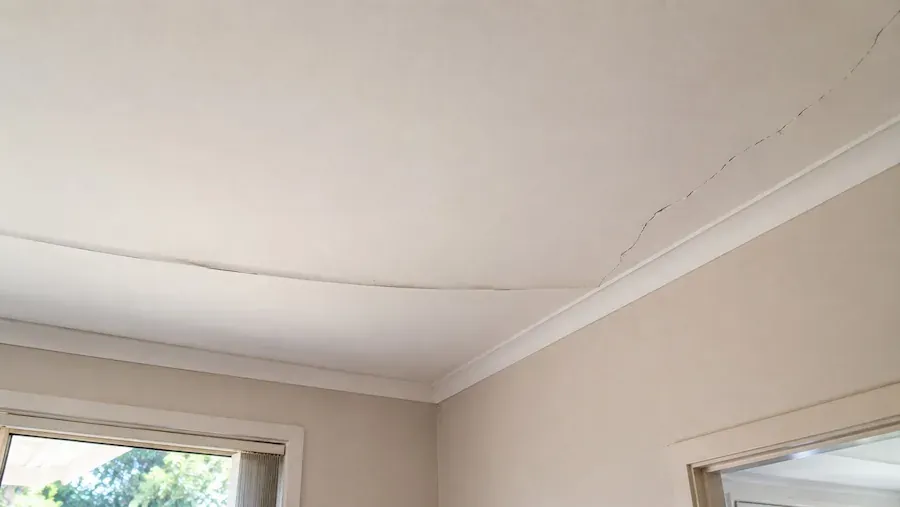
Bowed ceiling with the tell-tale crack tracing the cornice line -
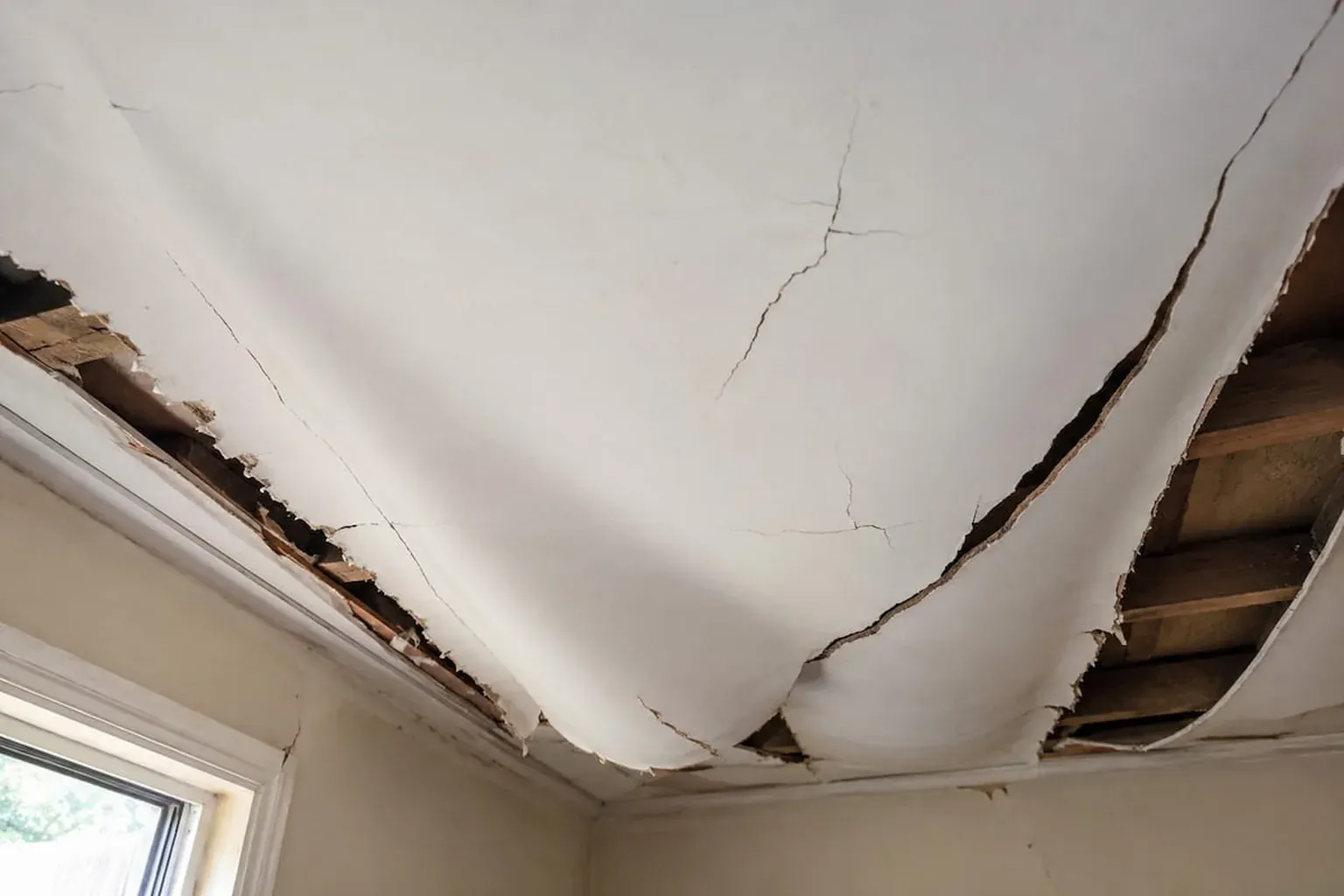
Ceiling that has let go at the cornice with roof timbers showing: past re-fixing, this one is replaced -
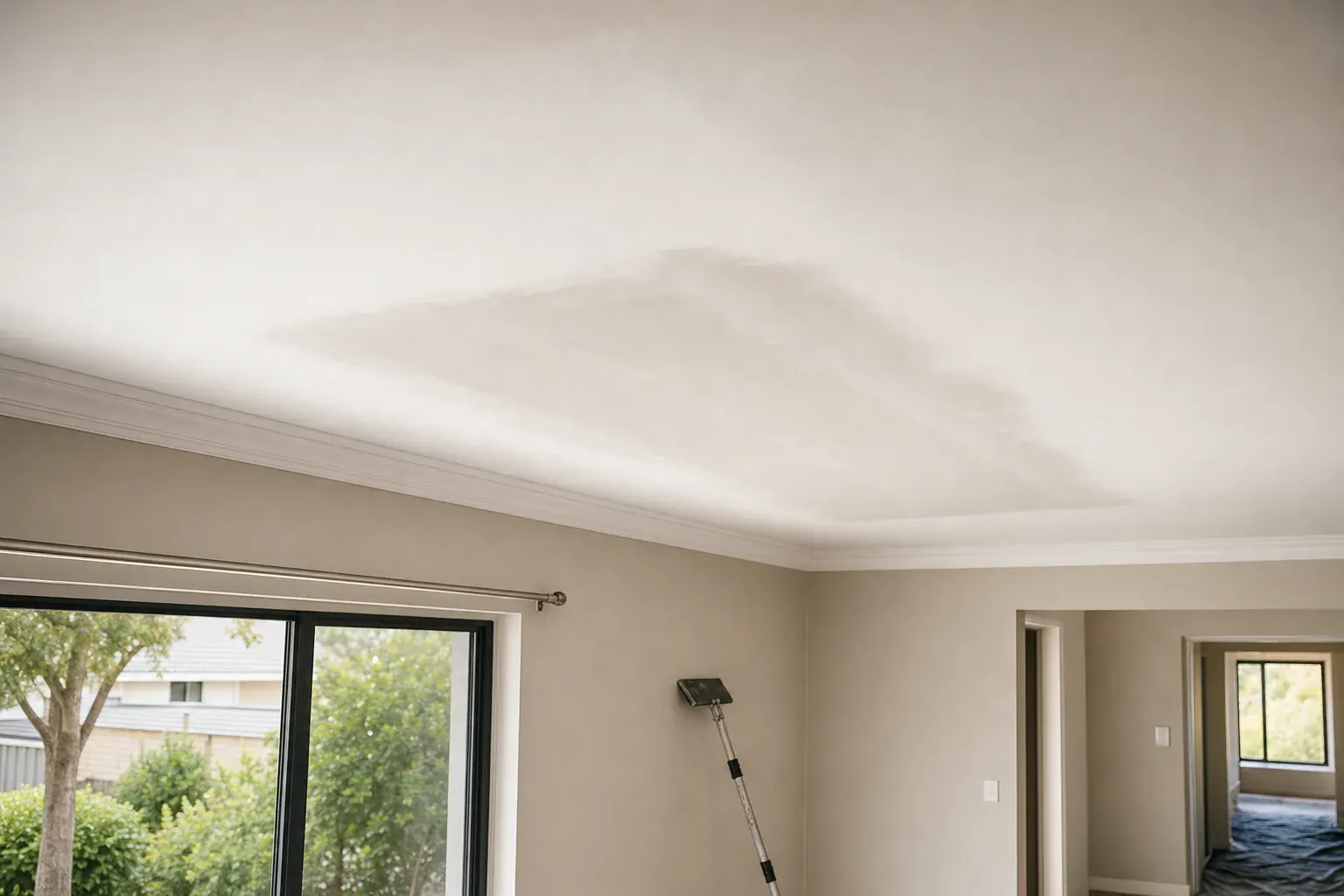
Re-fixed ceiling set, sanded and ready for paint -
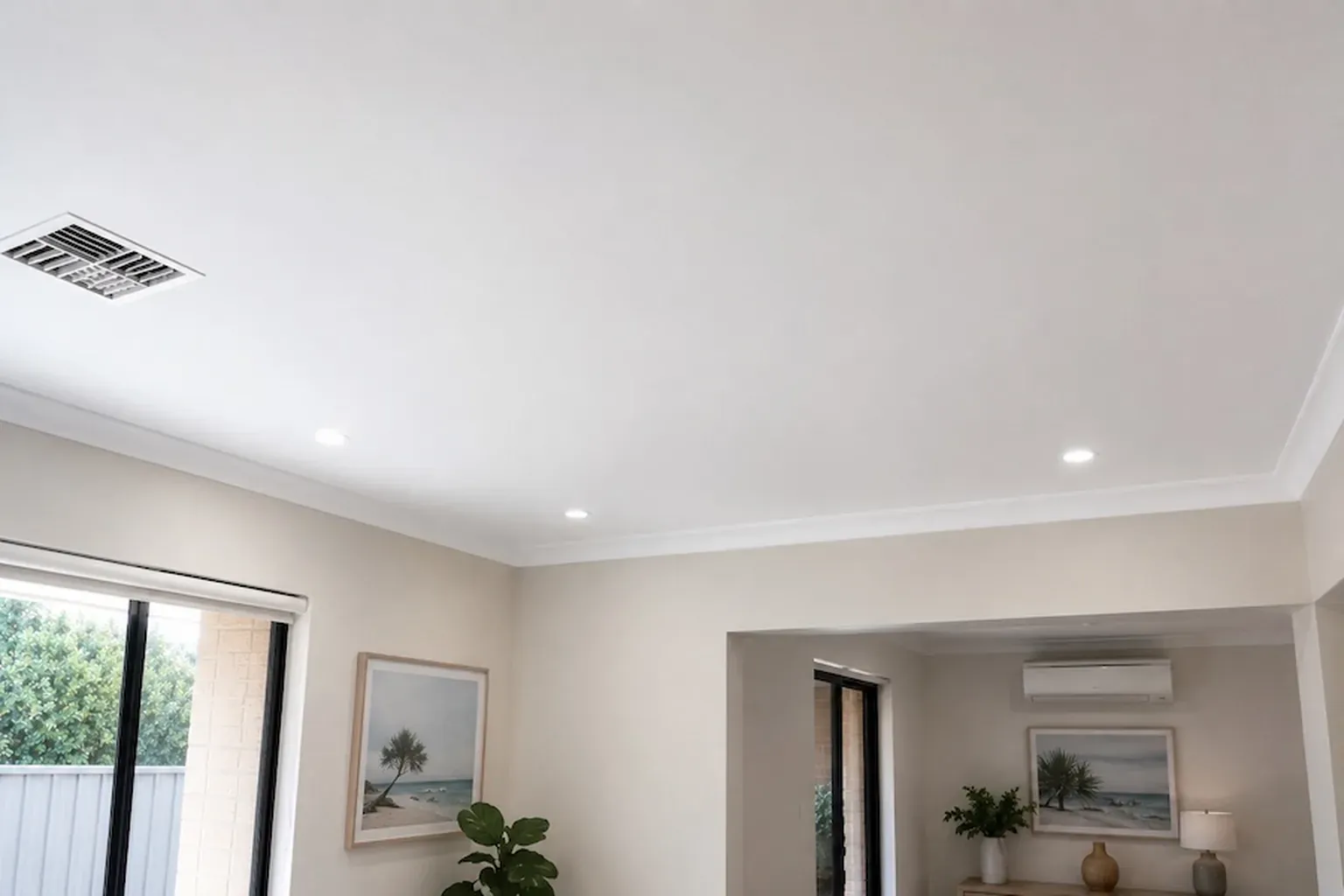
Finished ceiling, flat under the downlights, with cornice and vent back in place
From first call to paint-ready
-
Call or send photos
Describe what you can see and how long it has been happening. A photo taken from the doorway with the light on helps us gauge urgency before we come out.
-
Inspection in the roof and the room
We measure the drop, check the fixing method, look for the cause and confirm the sheets are sound enough to re-fix.
-
Written quote
You get an itemised quote for the repair, and if replacement is the better option you get that price too so you can compare.
-
Re-fix and re-strap
Furniture is covered, the ceiling is pulled back up in stages, strapping is renewed from above where needed.
-
Set, sand, paint-ready
Fixing heads and any cracks are set with multiple coats and sanded flush. You are left with a flat ceiling ready for your painter.
What moves the price, and why some jobs need a look first
Many jobs can be quoted from your photos and a description. Others are a different job once someone is in the roof space, which is when we come and look first. These are the things that move the price for sagging ceilings.
Call 0485 084 943- Floor area of the ceiling and how far it has dropped
- Plasterglass versus plasterboard, and sheet thickness
- Whether re-strapping from the roof space is needed as well as face fixing
- Roof-space access, pitch and how much insulation has to be moved
- Condition of the cornice and whether it needs re-fixing or replacing
- Any water damage or termite damage found during inspection
- Height of the ceiling and scaffold or platform requirements
- Number of rooms done in the same visit
Sagging Ceilings: your questions
Can a sagging ceiling be fixed without replacing it?
How urgent is a sagging ceiling?
Why do so many Perth ceilings sag?
Will the repair be visible afterwards?
Do I need to move out of the room?
Get a Quote
Tell us what the ceiling is doing and where you are. We will call you back to talk it through and arrange a time to look at it.
Prefer to talk? Call 0485 084 943
Thanks, we have your details
We will call you back during business hours to talk about the ceiling. If it is urgent, ring us now on 0485 084 943.
Not sure what the ceiling is doing?
Describe it over the phone and we will tell you whether it needs looking at this week or can wait. Perth-wide, Monday to Friday.