Ceiling Re-strapping in Perth
Re-strapping is the repair that saves a sagging plasterglass ceiling instead of replacing it. The ceiling is propped back up to the joists, new straps are fixed over the timbers from the roof space, the sheet is screwed off from below and the joins are re-set. It is how most dropped ceilings in Perth homes built before the mid-1980s should be fixed, and it is the job we are asked about most.
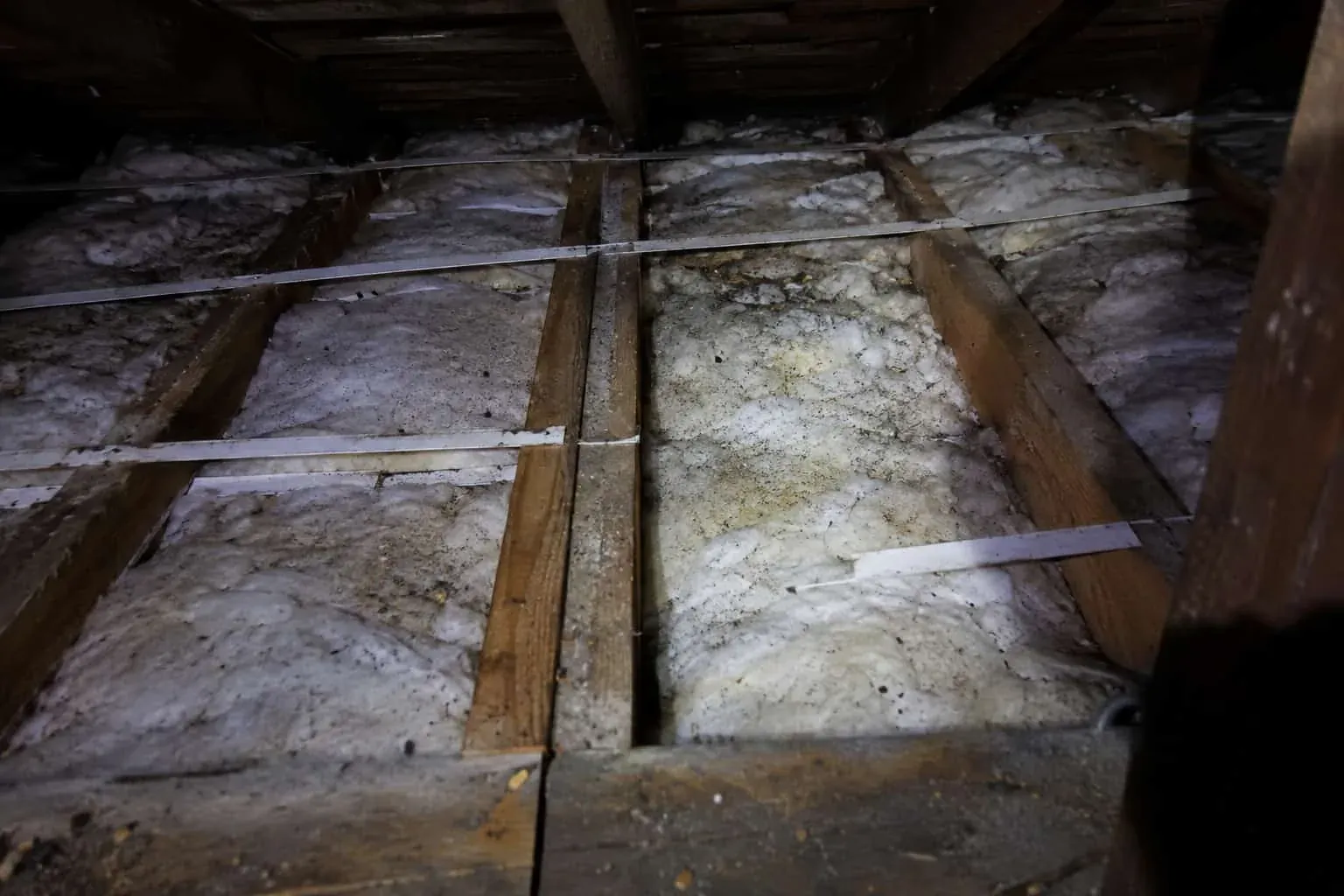
What you will usually notice first
Sag with the sheet still in one piece
The ceiling has dropped along a wall or bellied in the middle, but there is no hole, no broken edge and no water. That is a ceiling that has lost its straps, not its plaster, and it is the ideal candidate.
A gap at the cornice you can get a fingernail into
The cornice has stayed bedded to the wall and the ceiling has come away from it. Re-strapping closes that gap by lifting the ceiling, rather than filling it and watching it open again.
Cracks on the joins that keep reopening
If the joins have been filled before and have cracked straight back, the sheets are moving on failed fixings. Filler cannot hold a sheet up; straps can.
The ceiling creaks in the heat
A ceiling that ticks and pops on a hot afternoon is shifting on the last of its fixings as the roof space expands. Re-strapping while it is still a noise rather than a drop is the easy end of this problem.
Movement after work in the roof
Insulation, ducting or solar installs are the usual trigger. If the ceiling dropped after trades were up there, the straps were marginal already and the rest of the house should be checked at the same time.
A previous re-fix that did not hold
Screws through the face with nothing renewed above are half a fix. If a ceiling was re-fixed a few years ago and is now sagging between the screw lines, it needs straps from above to carry the weight.
The way the job actually gets done
The roof-space inspection decides it
Whether that look happens before the quote or on the first morning of the job, the roof-space check covers four things: the timber the straps will fix to, what is left of the original straps and glue, how much insulation has to be moved to get at the sheet, and whether the access and pitch let us work along every joist. Termite-eaten timber, a soaked sheet or a ceiling that has taken a permanent curve rules re-strapping out, and we say so.
Lift before fixing
A sagging sheet is never forced up in one go. Props and a spreader board take the ceiling back to the joists in stages so the plaster is not cracked on the way up, and so the joins close rather than crush.
Straps from above, screws from below
With the ceiling held hard against the timbers, new straps are laid over the joists and fixed down onto the back of the sheet so it hangs from the joists again. From below, the sheet is screwed off through the face into the joists with washers so it is held both ways. Insulation that was lifted goes back once the straps have set.
Joins re-set and the surface made good
Lifting the ceiling closes the sag but leaves opened joins, a cracked cornice line and screw heads to deal with. Those are raked out, set in several coats, sanded flush and skimmed where needed, and the cornice is re-bedded. You get a flat ceiling, not a strapped one with the evidence showing.
What the work looks like
-
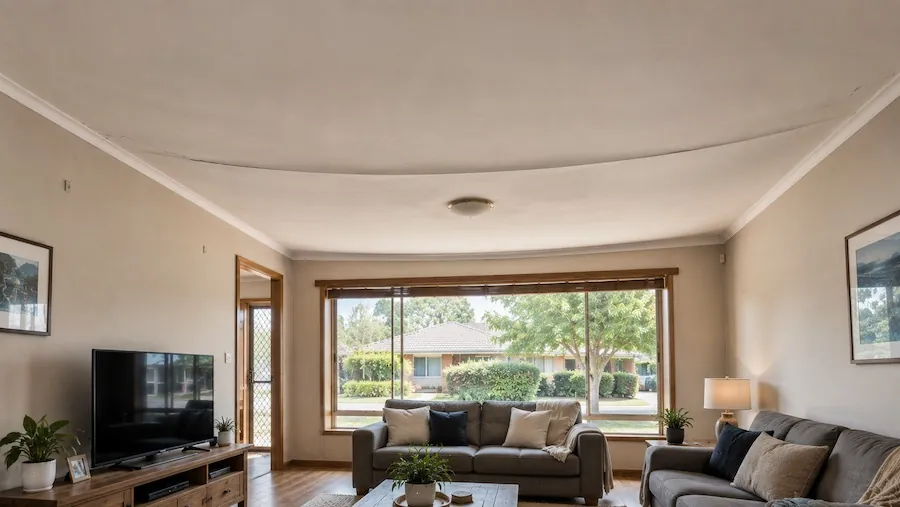
Sheet intact, dropped along one line: a textbook re-strap -
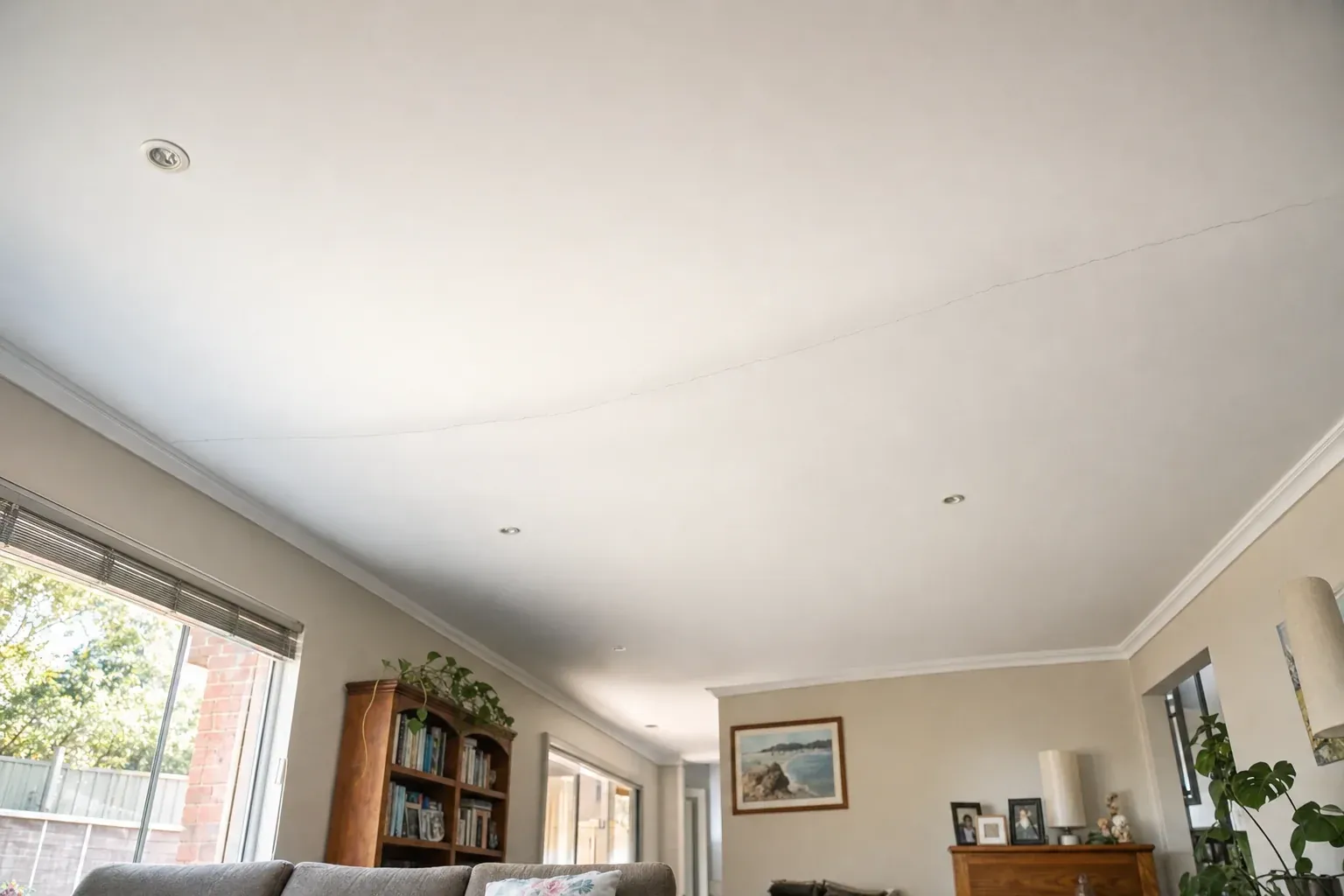
Join opened along the drop; it closes as the ceiling is lifted and is re-set afterwards -
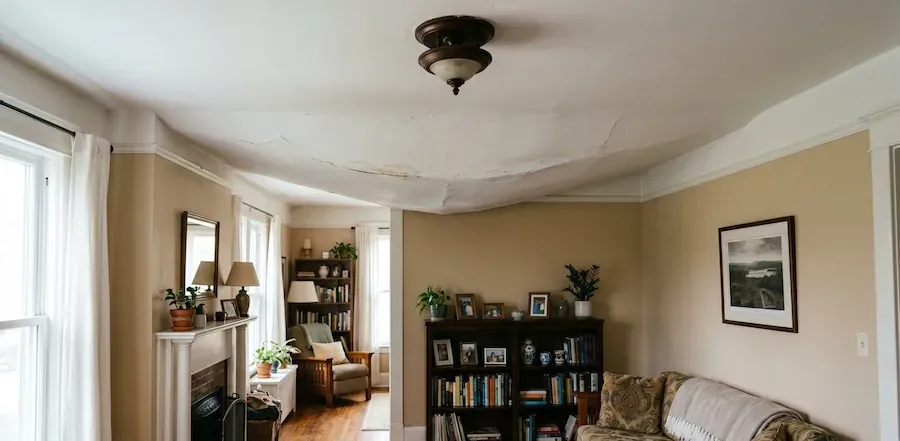
Sagged into a curve and cracked across the field: this one has taken a set and is replaced, not strapped -
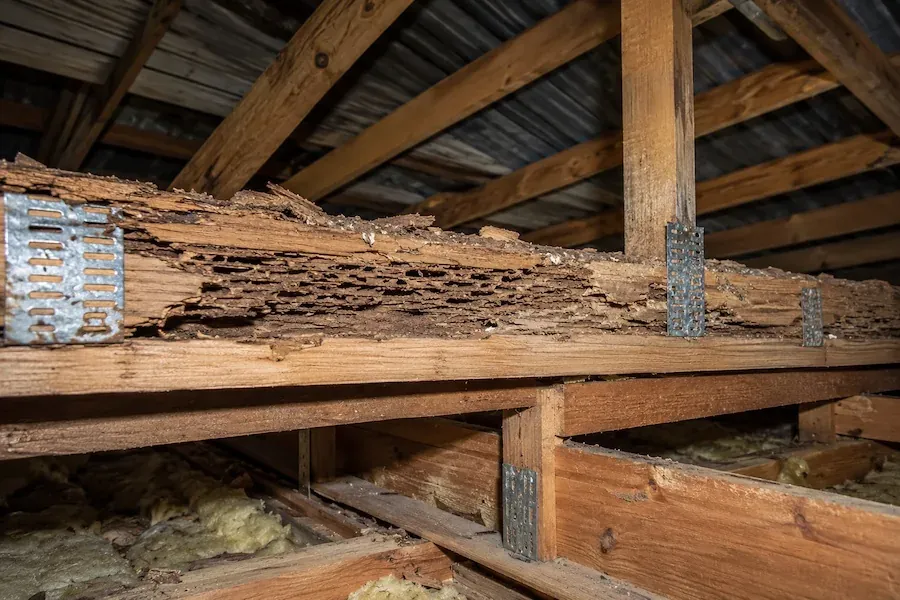
Termite-eaten joist: no strap will hold on this until the timber is dealt with -
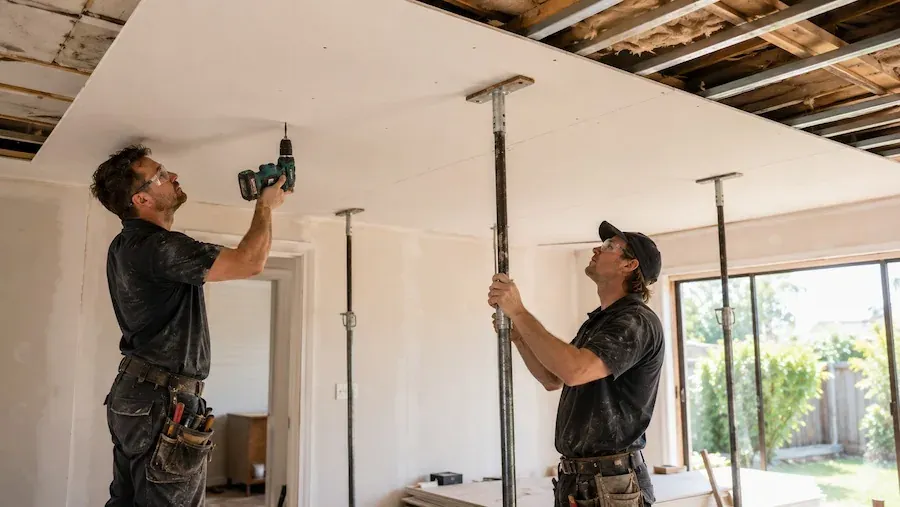
Props holding a sheet hard to the joists while it is screwed off; the same lift is used before strapping -
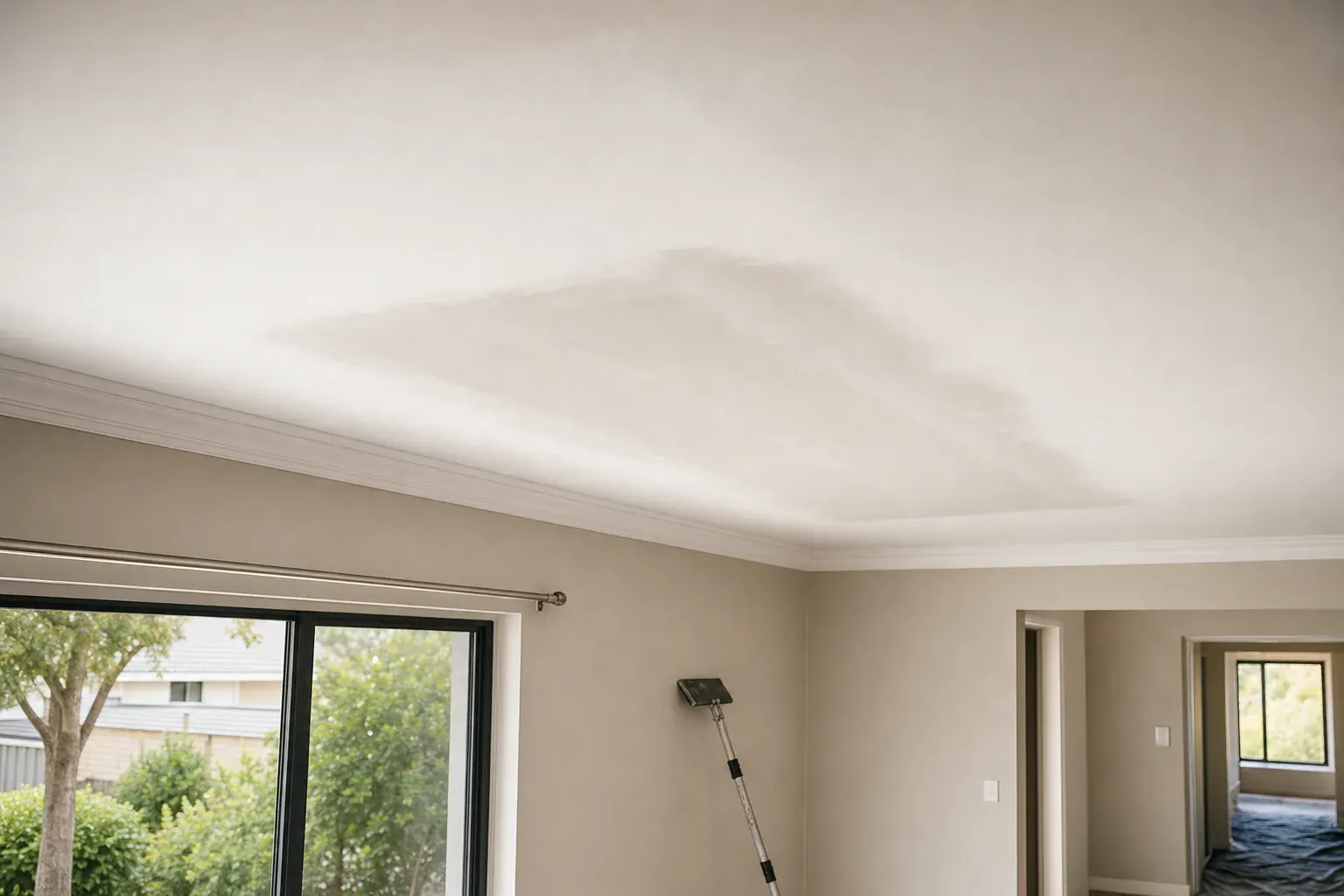
Re-strapped ceiling with screw heads and joins set and sanded, ready for paint
From first call to paint-ready
-
Call with a photo
The age of the house, which room, and a photo taken from the doorway with the light on tells us whether it sounds like a re-strap.
-
Quote, with a roof-space look when it needs one
A straightforward sag in a dry room is often quoted from the photos. Borderline ceilings, water history or awkward access get a visit: drop measured, roof space checked for timber, old fixings, insulation and access.
-
Written quote
Re-strapping itemised, with a replacement price alongside if the ceiling is borderline so you can compare.
-
Prop, strap, screw
Furniture covered, ceiling propped back to the joists in stages, straps fixed from the roof space, sheet screwed off from below, insulation relaid.
-
Set, sand, paint-ready
Joins, cracks and screw heads set in several coats and sanded flush. Painting is yours or your painter's, once the set has cured.
What moves the price, and why some jobs need a look first
Many jobs can be quoted from your photos and a description. Others are a different job once someone is in the roof space, which is when we come and look first. These are the things that move the price for re-strapping.
Call 0485 084 943- Ceiling area and how far it has dropped
- Roof-space access: manhole size, roof pitch, and whether every joist can be reached from above
- How much insulation has to be lifted and relaid
- Condition of the joists and whether any need packing or repair before straps will hold
- Whether the cornice has to be re-bedded or replaced along the same wall
- Number of joins and cracks that open when the ceiling is lifted and need re-setting
- Ceiling height and whether a platform is needed to prop safely
- One room or the whole house done in the same visit
Re-strapping: your questions
What is ceiling strapping?
Re-strap or replace: how do you decide?
Can you re-strap if there is no roof access?
Will I see the straps or the screws afterwards?
Can you re-strap a water-damaged ceiling?
Get a Quote
Tell us what the ceiling is doing and where you are. We will call you back to talk it through and arrange a time to look at it.
Prefer to talk? Call 0485 084 943
Thanks, we have your details
We will call you back during business hours to talk about the ceiling. If it is urgent, ring us now on 0485 084 943.
Related services
Read before you call
Not sure what the ceiling is doing?
Describe it over the phone and we will tell you whether it needs looking at this week or can wait. Perth-wide, Monday to Friday.