How to Prepare a Room for Ceiling Repair
Ceiling work is done overhead, so everything underneath it is in the way. A little preparation the night before makes the day run faster, keeps your belongings clean, and means the fixer spends the first hour fixing rather than moving your couch. This is the checklist we would give anyone booking us in, from furniture to fans to what happens to the dust.
By Ceiling Fixers Perth · Updated 3 October 2026
Furniture: out if you can, covered if you cannot
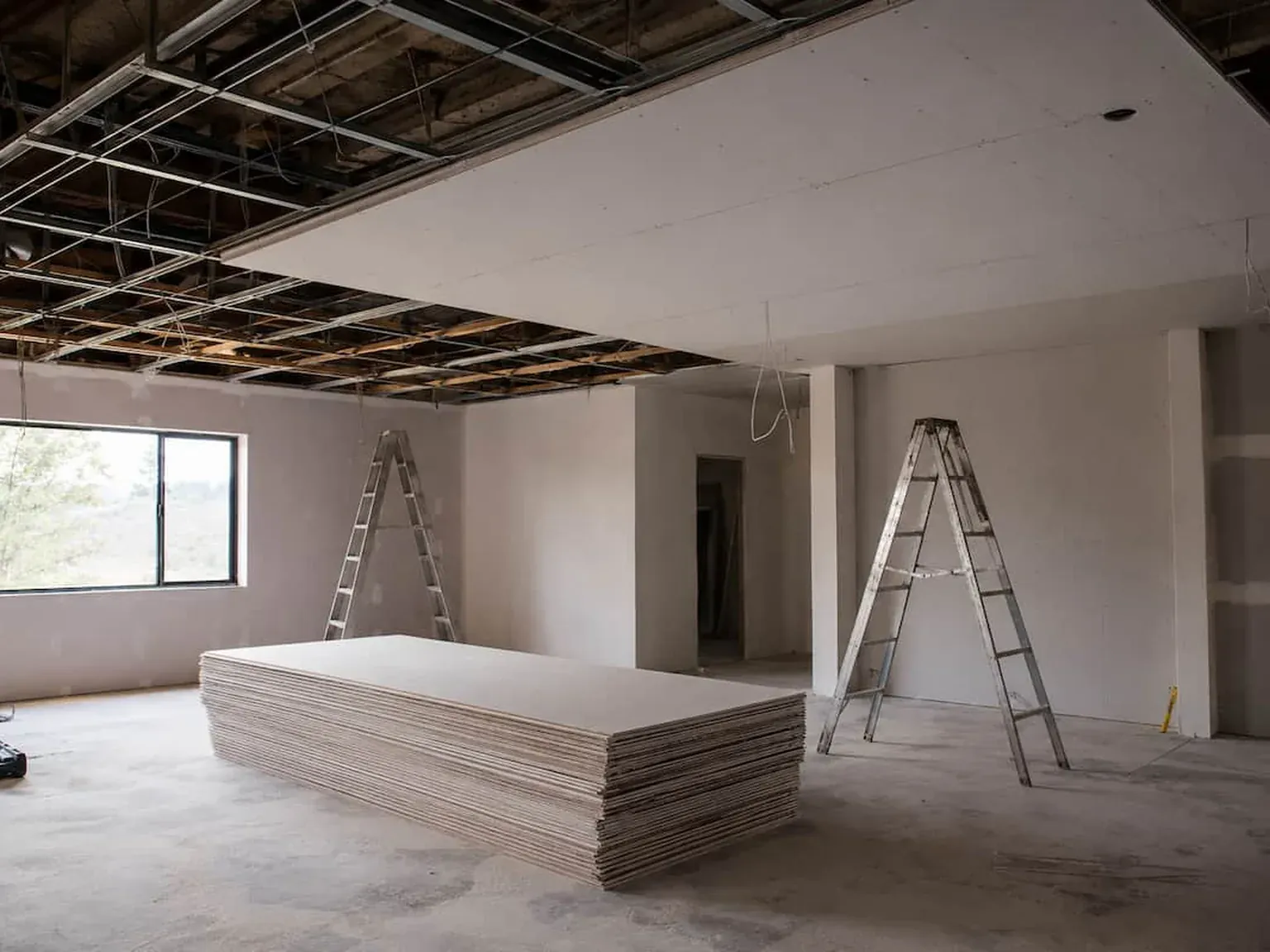
The ideal is an empty room. Everything that can be carried out, should be: chairs, side tables, lamps, rugs, cushions, anything on shelves. Beds, wardrobes, lounges and large cabinets that cannot leave the room are moved to the centre or to the side away from the work area, depending on where the damage is, and covered completely with plastic sheeting. Plaster dust is fine and gets into everything, and a sheet draped loosely over a lounge does not keep it out. Tape the plastic down or tuck it under.
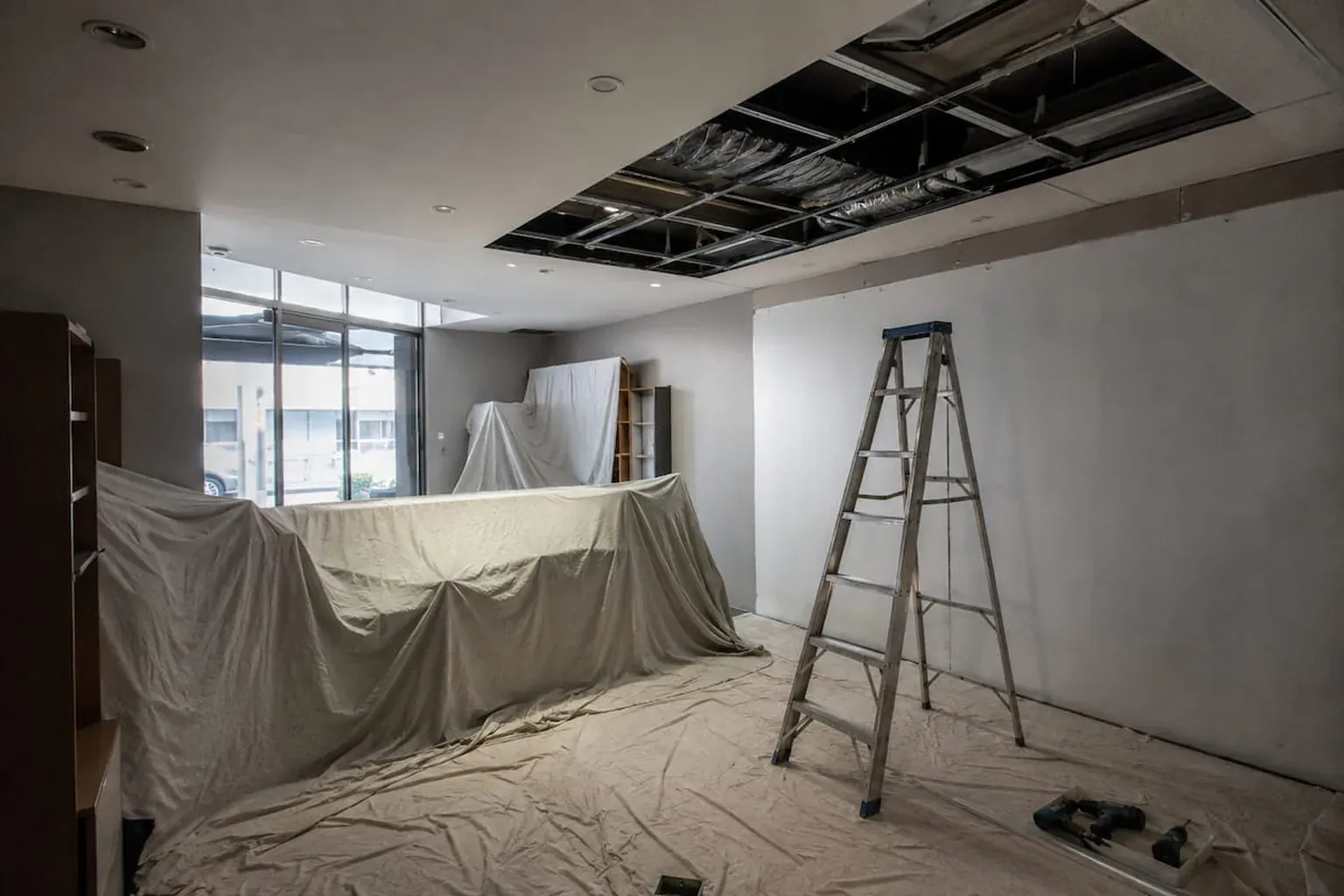
If a whole ceiling is coming down, the room needs to be as empty as possible, because the old sheet comes down in pieces and the space is needed to work and to carry debris out. Tell the fixer in advance if something heavy genuinely cannot be moved; it changes how the job is planned.
Walls, windows and floors
Take down pictures, mirrors, clocks and wall-mounted shelves. Vibration from working in the ceiling and from fixing into the joists is enough to walk a picture off its hook, and anything on a wall under a cornice repair will be in the way. Remove curtains and blinds where the work is near the window, or at least tie them up and cover them. Take anything off the top of wardrobes and cabinets.
Floors get covered with drop sheets or protective film on the day, but it helps to vacuum beforehand, roll up rugs, and move anything on the floor out of the way. Timber and polished concrete floors are protected with more care than carpet; mention what your floors are when booking.
People and pets
The room being worked on is off limits during the job, and ideally the hallway outside it too while debris is being carried out. Children and pets should be kept well away: there will be ladders, trestles, sharp offcuts, dust and, during a replacement, plaster coming down. Dogs in particular find a roof-space manhole and a stranger up a ladder very interesting. If the roof access is in a bedroom or hallway, that area needs to be clear as well, because the fixer will be in and out of the roof space repeatedly.
Access, parking and the roof space
Clear a path from the front door to the work area wide enough to carry a sheet of plasterboard, which is longer and more awkward than most furniture. If the only route is through a narrow side gate or a tight hallway, say so when booking. Somewhere to park close to the house matters more than people expect; sheets, trestles, tools and bags of debris all move between the vehicle and the room many times in a day.
The roof-space manhole is the most important access of all. Find it, make sure the cover lifts, and clear whatever is stored under or around it. If it is in a wardrobe, empty the top shelf. If the manhole is tiny, has been painted shut, or you are not sure where it is, mention that in advance. Work that can be done from the roof space is quicker and cleaner than work done from below, so good roof access shortens the job.
- Clear path from the door to the room, wide enough for a plasterboard sheet
- Parking as close to the house as possible
- Roof-space manhole located, cover lifts, area beneath it clear
- Side gates unlocked if the route is around the outside
Power, lights, fans and smoke alarms
The fixer needs a power point within reach of the room for tools and a work light; let them know if the room has none working. Light fittings, ceiling fans and downlights in the work area usually have to come down. Disconnecting and reconnecting them is electrical work and is done by an electrician, not the ceiling fixer, so this needs to be arranged ahead of the job. For a simple re-fix the fittings can sometimes stay; for a replacement they always come down. If a smoke alarm is in the ceiling being worked on, it comes down too and goes back up afterwards; make sure it is tested when it does.
If water was involved in the damage, do not switch the lighting circuit for that room back on until an electrician has looked at the fittings and wiring, even if the ceiling looks dry.
Dust: what to expect
Setting and sanding plaster makes fine white dust. Taking down an old ceiling makes a lot of coarse dust, plus whatever has been sitting on top of it for fifty years, which in an older Perth home is a layer of grit, old insulation, and sometimes the remains of a rat or two. Doors are closed and the room is sheeted, but some dust reaches the rest of the house. Close doors to other rooms, cover anything you care about in adjoining spaces, and switch off ducted air conditioning or evaporative cooling for the day so it does not pull dust through the house.
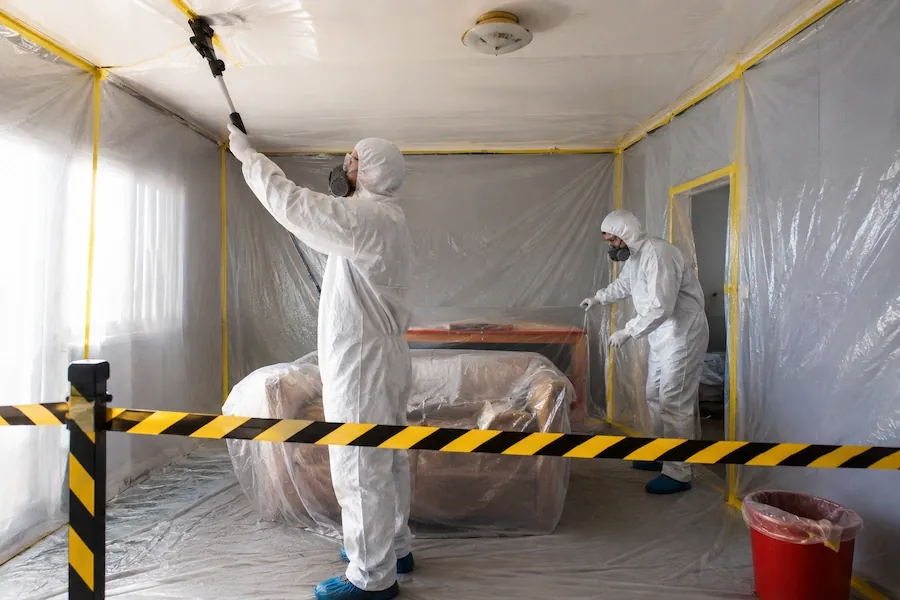
In homes built before about 1990, the ceiling, the cornice, a previous patch or material above the ceiling may contain asbestos. If there is any doubt, a sample is tested by a qualified asbestos assessor before anything is cut or taken down. That is not something to work around on the day; it is sorted before the job is booked.
What the fixer brings, and what gets cleaned up
You do not need to supply anything beyond access and a power point. Drop sheets, plastic, trestles, ladders, plaster, plasterboard, fixings, cornice and the tools come with the job. At the end of the structural and setting work the drop sheets come up, the bulk of the dust is swept and vacuumed, and debris from a replacement is removed. The room is left clean enough to walk through, but not spotless: there will be a fine film of dust on surfaces that settles over the following day, and a final wipe-down and vacuum after the last sanding is normally the owner's job before painting.
After the job: paint, and putting the room back
The ceiling is handed back set, sanded and ready for paint. Let the final coats cure fully before painting, which can be a few days in summer and longer in winter. Painting is done by you or your painter; a new or patched ceiling normally needs a sealer or undercoat before the top coats, and the full ceiling is painted rather than just the repaired area so that it reads as one surface. Once painted, the electrician refits the lights, fans and smoke alarm, and only then does the furniture go back. The guide on how long ceiling repairs take gives a sense of how these steps fit together, and ceiling replacement describes the larger version of the job.