Ceiling Damage and Home Insurance: General Guidance
Whether a damaged ceiling is something your home insurance will cover depends on your policy and on what caused the damage, and we are ceiling fixers, not insurance advisers. What follows is general guidance based on what we see when customers go through the process. Read your own product disclosure statement, and talk to your insurer before you rely on any of it.
By Ceiling Fixers Perth · Updated 3 October 2026
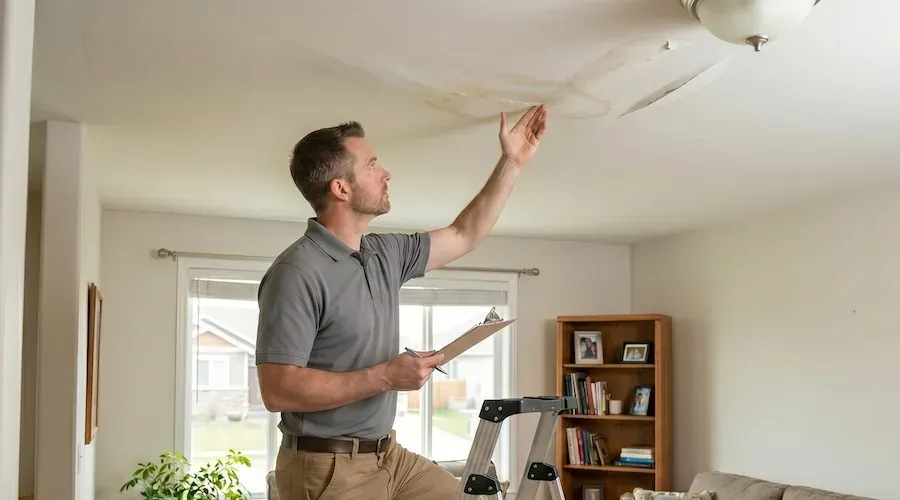
The distinction that decides most claims
Home insurance policies commonly draw a line between damage caused by a sudden, identifiable event and damage caused by gradual deterioration. A storm that lifts tiles and floods a ceiling in one night, a burst pipe in an upstairs bathroom, a tree branch through the roof: these are the kinds of events policies are generally written to respond to. A ceiling that has sagged slowly over twenty years because the original glue and strapping aged, or a stain from a slow leak that has been dripping unnoticed for months, is more often treated as wear and tear, lack of maintenance or gradual damage, and policies commonly exclude that.
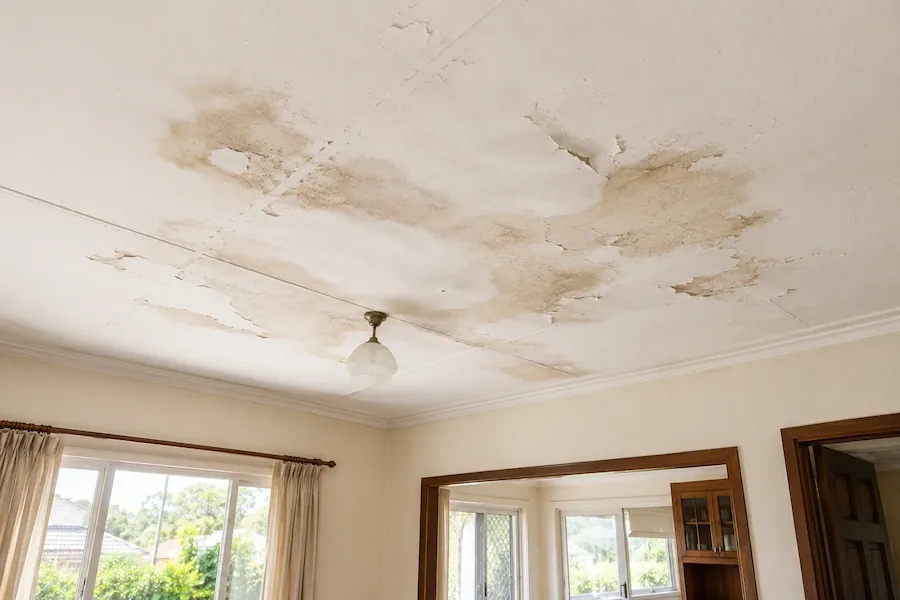
This is why the cause matters so much, and why an insurer will usually want to know not just that the ceiling is damaged but why. It is also why a water-damaged ceiling can go either way: the same stain can be the result of a single storm or of a tile that has been cracked for three winters. The evidence you gather in the first few days often decides which story the insurer accepts.
Read the PDS before you call
Every policy has a product disclosure statement that lists what is covered, what is excluded, and what the excess is. Search it for the words storm, water, escape of liquid, gradual, wear and tear, maintenance and ceiling. Pay attention to whether storm cover requires the water to have entered through damage the storm caused, as opposed to through an opening that was already there, and to any clause about damage that happens over time. Knowing this before you ring the claims line means you can describe what happened in terms the policy actually uses.
Also check whether the policy has a requirement that you take reasonable steps to prevent further damage, and whether it says anything about using the insurer's own repairers. Both are common.
Document everything, with dates
Photograph the damage the day you find it, from the doorway and up close, with something for scale. Photograph the roof, the gutters, the aircon unit or whatever you think the source is. If it rained or stormed, note the date and keep any weather warnings or news reports. If a pipe burst, photograph the pipe and keep the plumber's invoice. Write a short timeline: when you first noticed something, what you did, who you called. Keep every receipt, including for emergency measures like tarps or buckets.
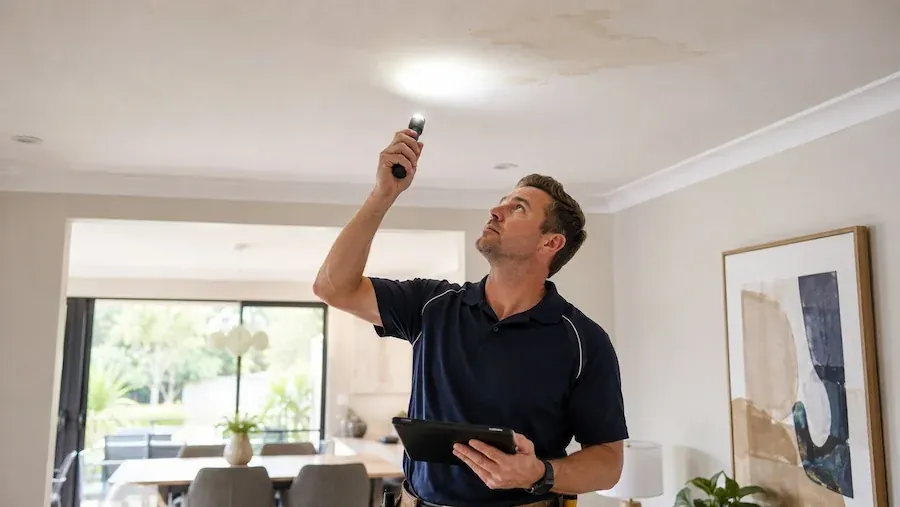
If the ceiling comes down, photograph it before anything is cleaned up, and keep a piece of the fallen plaster if it is safe to do so. Insurers will sometimes want to see the material.
- Dated photos of the damage, the source, and the roof or plumbing involved
- A written timeline of what happened and when
- Weather records for the date of a storm
- Invoices from any trade who attended, including emergency work
- Receipts for tarps, buckets, dehumidifiers or anything bought to limit damage
Limit further damage, and keep proof that you did
Most policies expect you to take reasonable steps to stop the damage getting worse. That means getting the leak stopped, moving furniture, putting a bucket under a drip, and having a dangerously sagging ceiling made safe. It does not mean you have to carry out the full repair before the claim is assessed, and in fact doing permanent repairs before the insurer has seen the damage can complicate things. Emergency make-safe work is generally fine; keep the invoice and photos of what was done.
Get a written report and quote
An insurer will usually ask for a report describing the damage, its likely cause, and a quote to repair it. A ceiling fixer who has been in the roof space can provide that: what the ceiling is made of, what has failed, what the water or impact did, and what it will take to put right. Ask for the report to state the cause plainly, because that is the part the insurer reads first. A report that says the ceiling collapsed because a valley gutter overflowed during a named storm reads differently from one that says it collapsed because the strapping had aged.
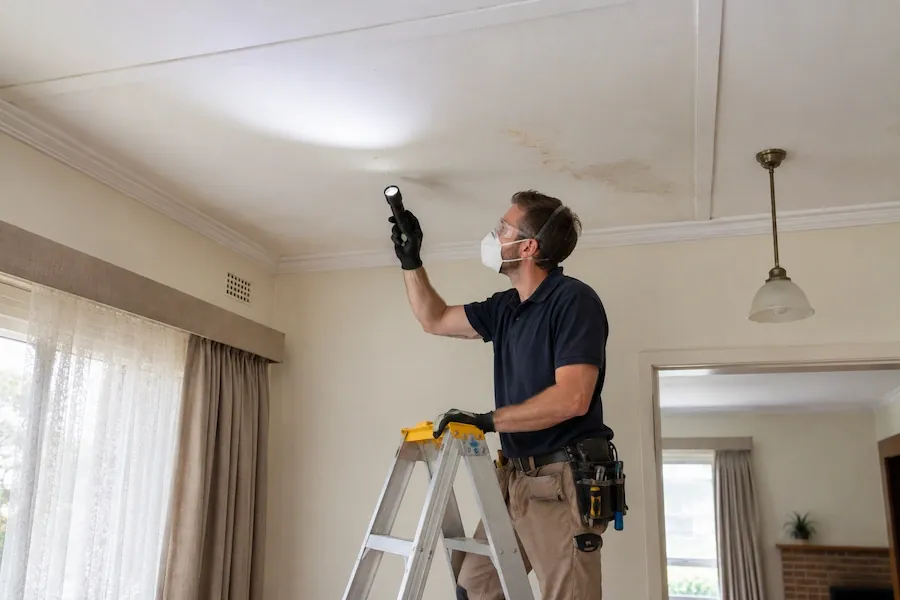
Be honest in the report and in your claim. If the ceiling was already sagging before the storm, say so. Insurers assess a lot of ceilings and are familiar with the difference between a fresh failure and an old one, and a claim that does not match the physical evidence tends to go badly.
The assessor, and choosing your repairer
For anything beyond a minor claim, the insurer will often send an assessor or a builder to look at the damage. Have your photos, timeline and report ready. Walk them through what happened. Be there, if you can, so you can answer questions and hear what they say.
Some policies let you choose your own repairer and some steer you towards the insurer's panel. If you want a particular tradesperson to do the work, check the policy and ask the claims officer directly. Where the insurer offers a cash settlement instead of arranging repairs, make sure the amount reflects a real quote for the work, not an estimate from someone who has not seen the ceiling. We are happy to quote for insurance work and to speak to an assessor about what we found, but we do not deal with the insurer on your behalf and the claim is yours to run.
If the claim is declined
Ask for the reason in writing. If it is declined as gradual damage or lack of maintenance and you believe the cause was a sudden event, you can usually ask for an internal review and, beyond that, take it to the external dispute resolution scheme the insurer belongs to. More evidence helps: weather records, a roofer's report on the tile damage, dated photos showing the ceiling was sound before. If the decline stands, the ceiling still needs fixing, and water-damaged ceiling repair or sagging ceiling repair is where to start.
A note on what we are not
Nothing here is financial or legal advice. We fix ceilings, and this is a description of what we see customers go through, written to help you ask better questions. Policies differ, insurers differ, and the facts of each claim differ. Your PDS and your insurer are the authorities on what your policy covers.