Water-Damaged Ceiling Repair in Perth
Water finds plaster quickly. A winter storm lifting a tile, a blocked valley gutter, a cracked aircon condensate tray or a slow leak from an upstairs bathroom will leave a brown ring on the ceiling, and often a soft, sagging patch behind it. Once the leak is fixed, we assess what can be saved, replace what cannot, and bring the ceiling back to paint-ready.
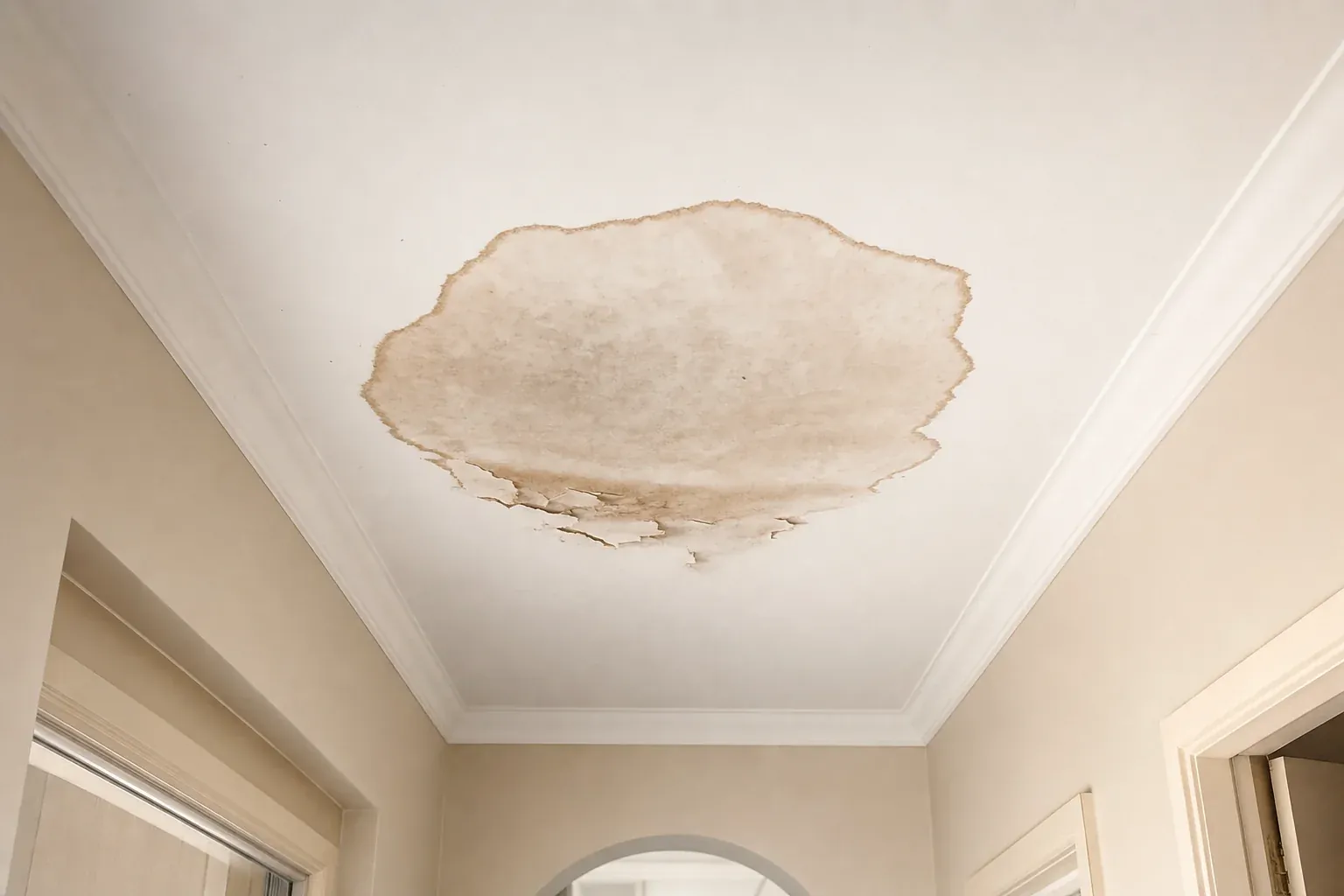
What you will usually notice first
A brown or yellow ring
The tide-mark stain is dried mineral residue. One ring means one wetting; concentric rings mean it has happened more than once and the leak is still live.
A bulge or sag below the stain
Plaster that has been soaked loses strength and starts to hang under its own weight. A bulge that moves or feels soft when gently pressed with a broom handle is close to coming down.
Peeling paint or blistering
Moisture pushing through from behind lifts the paint film. If it keeps blistering after being repainted, the plaster behind it is still holding water.
Black speckling or a musty smell
Mould on the ceiling surface means the plaster has stayed damp long enough to grow it. Surface mould on sound plaster can be treated; mould through the board usually means replacement.
Dripping from a light fitting
Water pooling on top of the ceiling often finds its way out at the lowest penetration, which is the light. Switch the circuit off at the board and keep clear until it has been looked at.
Cornice staining or separating
Water running down the inside of an external wall wets the cornice first. Stains that start at the cornice and track inward usually point to a roof or flashing problem above that wall.
The way the job actually gets done
Stop the water first
We are ceiling fixers, not roofers or plumbers. If the leak has not been found and fixed, repairing the ceiling just resets the clock. We will tell you honestly what we think is leaking from what we see in the roof space so you can get the right trade onto it, and we repair once it is dry.
Assess what is actually ruined
A stain on a dry, firm, flat ceiling is a cosmetic job. A stain on soft plaster, a sagging patch, or board that has delaminated needs cutting out. We check with a moisture meter from above and below and mark out the section that has to go.
Cut out and patch, or replace the sheet
Small areas are cut back to sound plaster and patched with new board tied into the joists, joins taped and set to blend. Where more than a patch is gone, the full sheet or the whole ceiling comes down and goes back as new plasterboard.
Seal the stain so it never bleeds through
Water stains will walk straight through ordinary paint. Where a stained but sound ceiling is being kept, the stain is sealed with a stain-blocking primer before setting, so your painter is not chasing it back through three coats.
What the work looks like
-
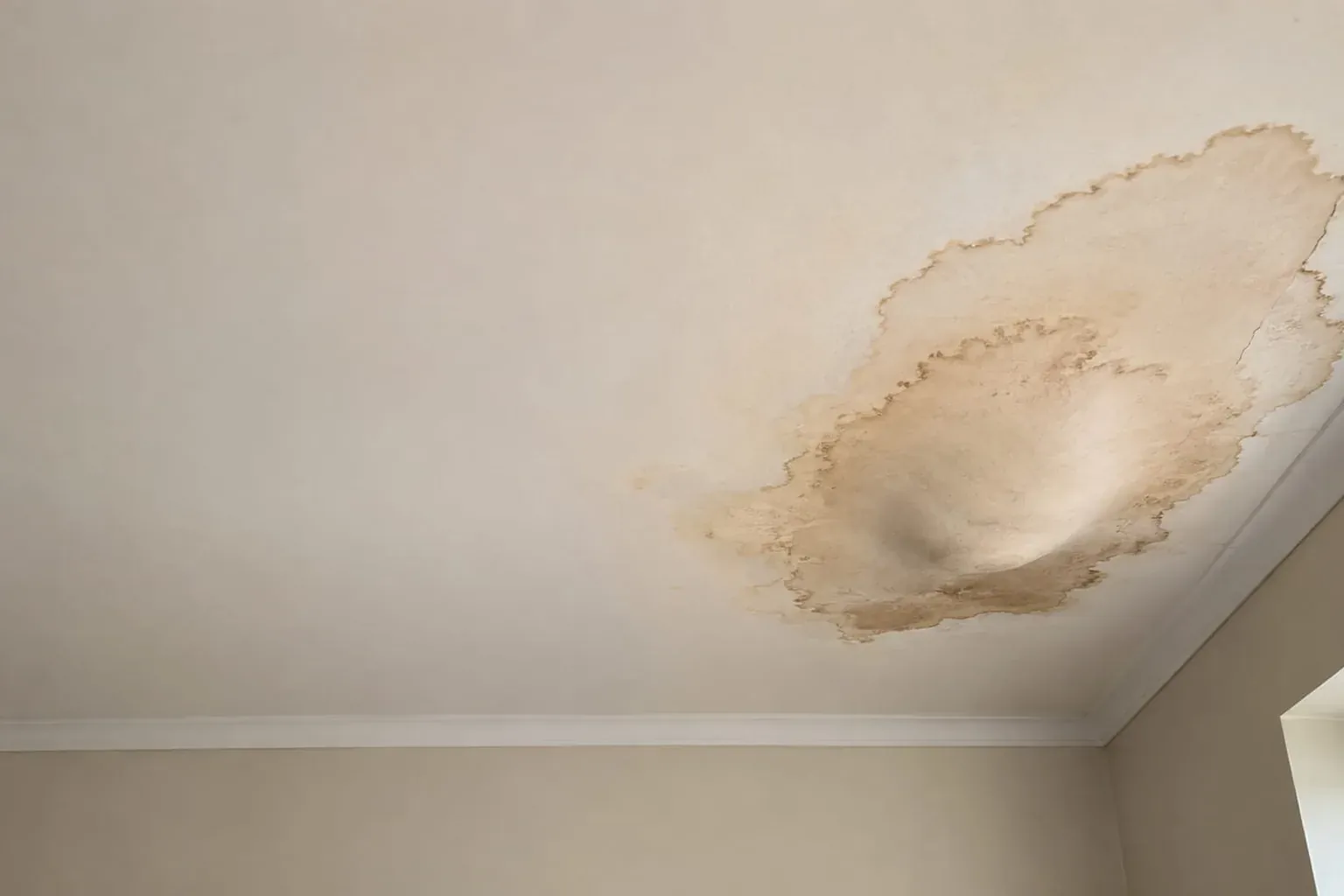
Stain with a bulge beneath it: the sheet has taken water and lost its strength -
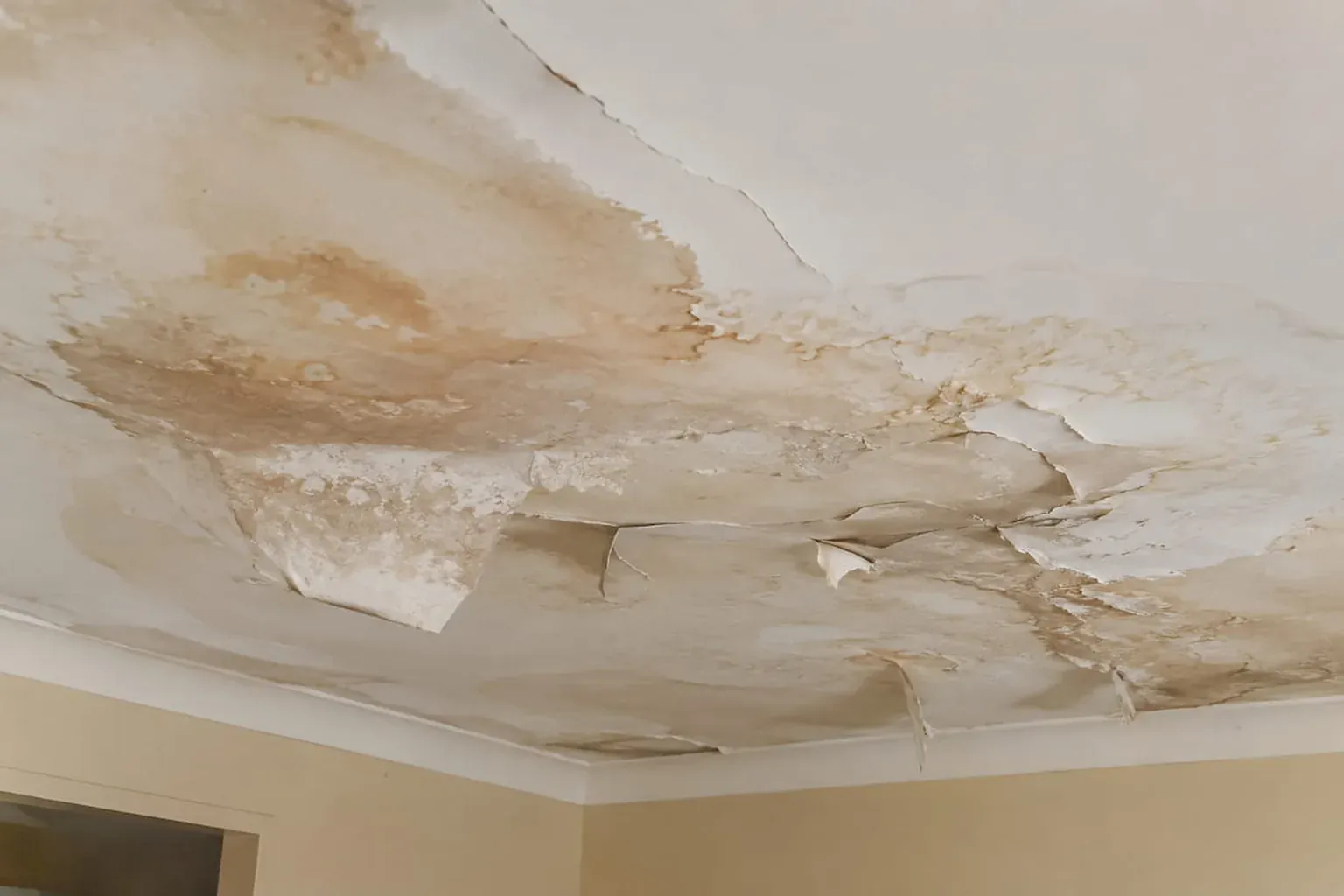
Long-running leak with flaking plaster across the whole sheet, a replacement rather than a patch -
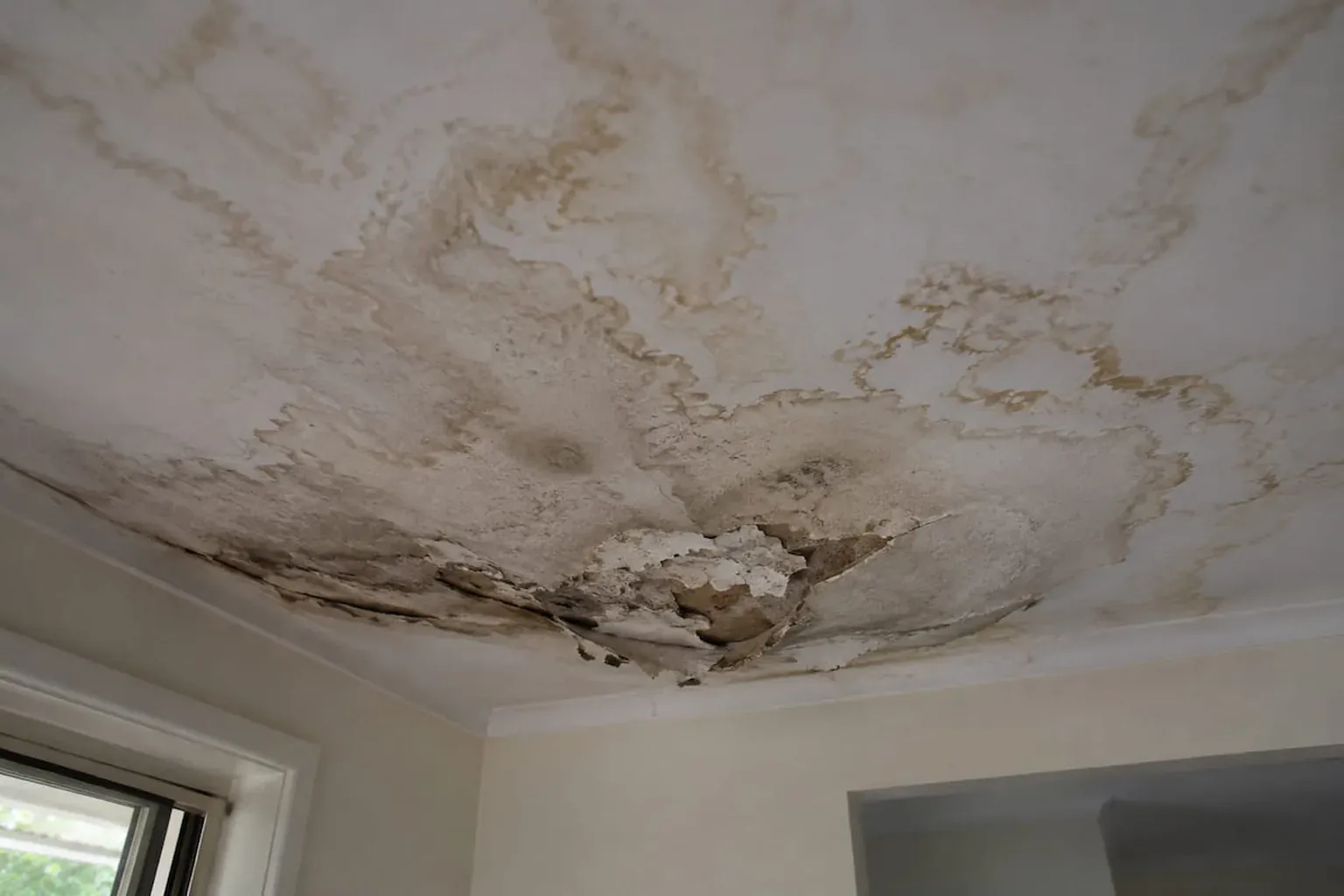
Plaster breaking through below a leak that was left too long -
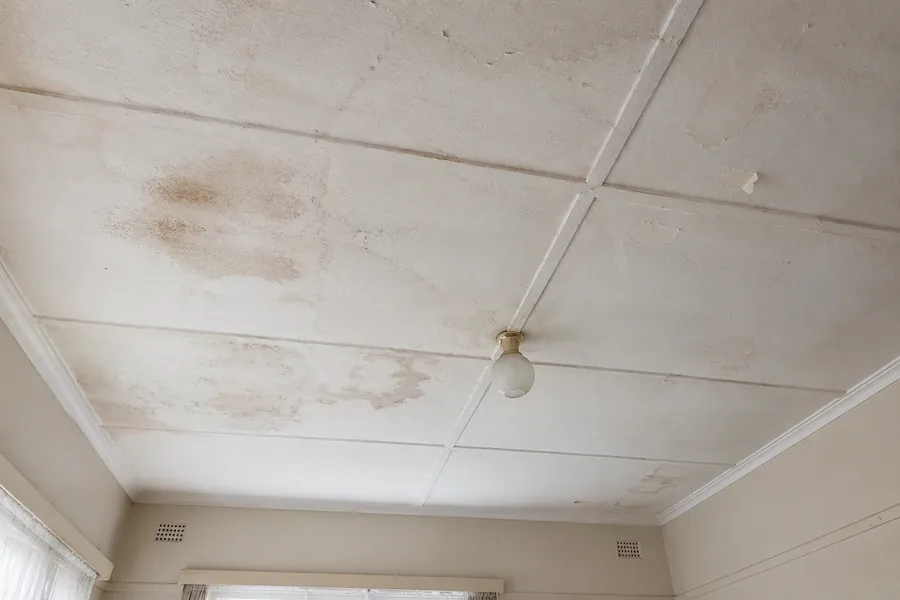
Stained sheet ceiling with cover strips in an older home; the sheet material is identified before anything is cut -
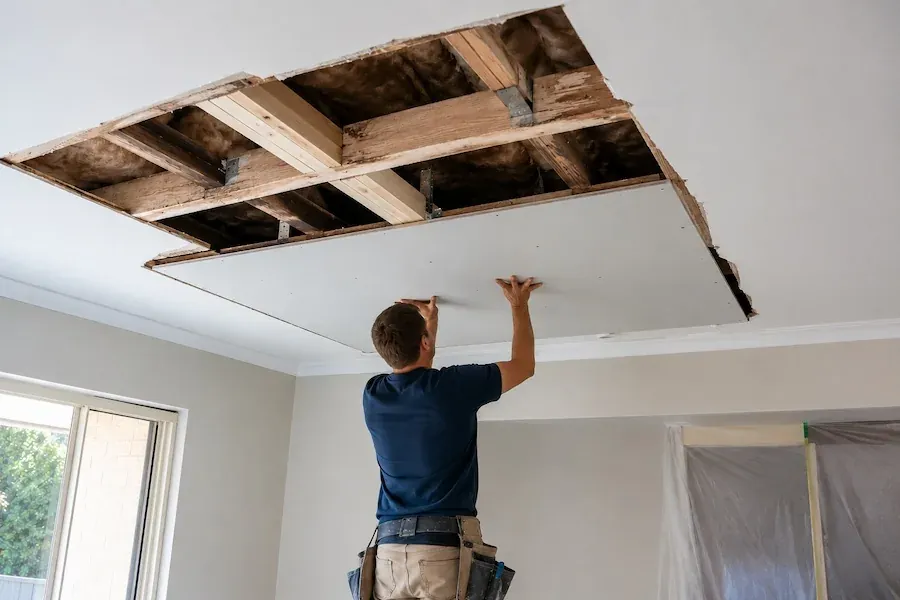
Damaged section cut out to the joists and a new piece of plasterboard being fitted -

What a repaired ceiling looks like once the painter has been through: no sign of the patch
From first call to paint-ready
-
Call us, and get the leak sorted
If water is still coming in, your roofer or plumber comes first. We can usually tell you what to look for from the stain pattern alone.
-
Inspect from above and below
Moisture readings, a look at the top of the ceiling in the roof space, and a check for mould or softened board.
-
Written quote with options
Patch versus sheet replacement versus whole-ceiling replacement, so you and your insurer, if one is involved, can see the difference.
-
Repair
Damaged plaster removed, new board fitted, joins taped and set, stains sealed, cornice repaired or replaced where water has got into it.
-
Paint-ready finish
Sanded flat and left ready for your painter. We can recommend painters we work with if you do not have one.
What moves the price, and why some jobs need a look first
Many jobs can be quoted from your photos and a description. Others are a different job once someone is in the roof space, which is when we come and look first. These are the things that move the price for water damage.
Call 0485 084 943- Whether the plaster is just stained or has gone soft and needs cutting out
- Size of the affected area and whether a full sheet replacement is cleaner than a patch
- Mould present and how far it has spread into the board or insulation
- Wet insulation that needs removing from the roof space
- Cornice damage along the same wall
- Whether the ceiling is plasterglass, plasterboard or an older lath-and-plaster ceiling
- Access, ceiling height and whether light fittings have to be removed by an electrician
- Drying time required before the repair can start
Water Damage: your questions
Can I just paint over a water stain?
Do you fix the leak as well?
How do you know if the ceiling needs replacing rather than patching?
Will my insurance cover a water-damaged ceiling?
How long does the ceiling need to dry before you repair it?
Get a Quote
Tell us what the ceiling is doing and where you are. We will call you back to talk it through and arrange a time to look at it.
Prefer to talk? Call 0485 084 943
Thanks, we have your details
We will call you back during business hours to talk about the ceiling. If it is urgent, ring us now on 0485 084 943.
Related services
Read before you call
Not sure what the ceiling is doing?
Describe it over the phone and we will tell you whether it needs looking at this week or can wait. Perth-wide, Monday to Friday.