There's a Water Stain on the Ceiling. What Now?
A brown ring on the ceiling is one of those things that is easy to ignore until it is not. It is also one of the few ceiling problems where the ceiling is not the real issue. Something above it is wet, and until that is sorted, any repair to the ceiling is wasted. This guide covers finding the source, working out which trade you need, and what to do with the ceiling once the leak is gone.
By Ceiling Fixers Perth · Updated 3 October 2026
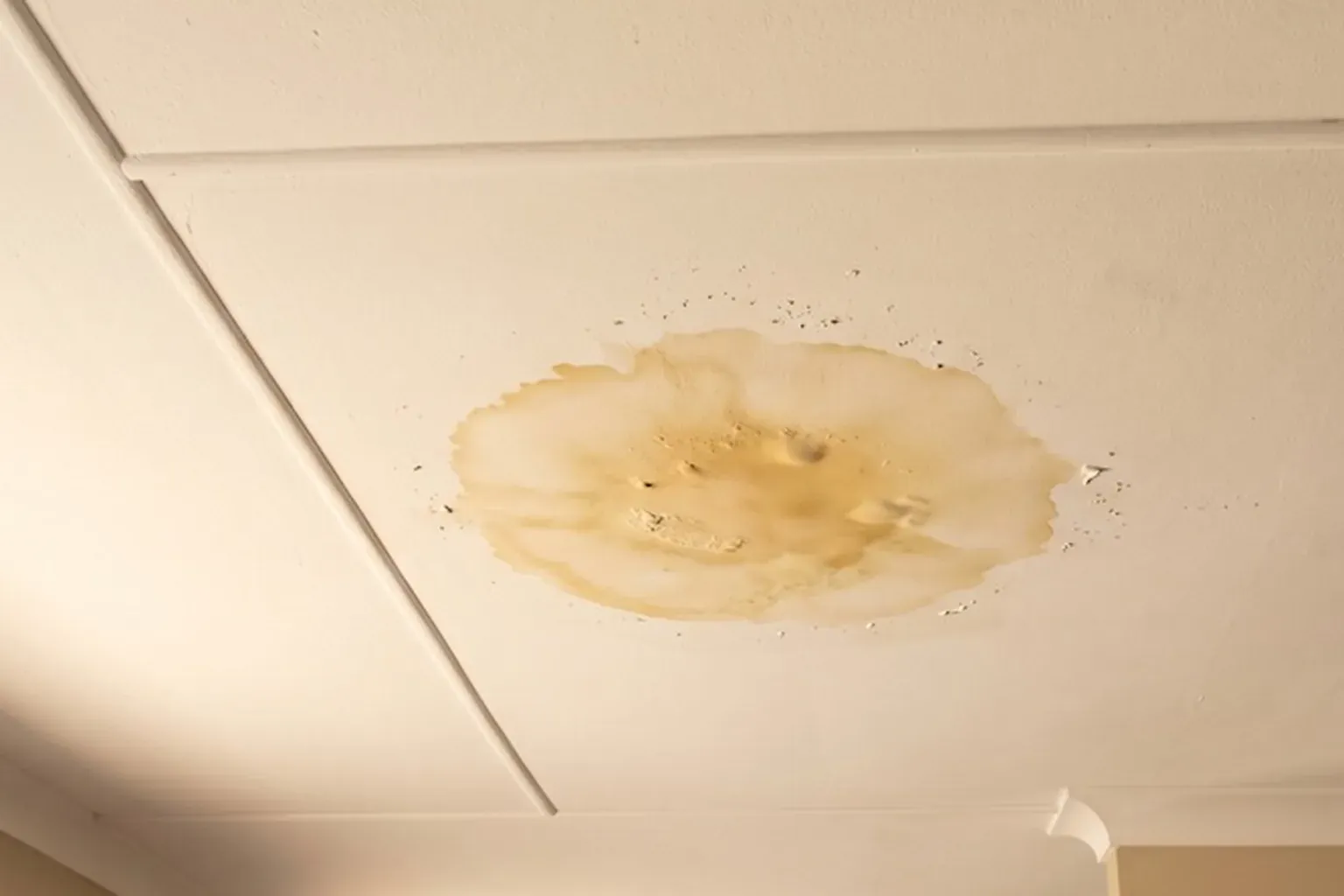
Stop the water first
The order of operations matters. A ceiling repairer who patches and paints over a stain while the leak is still live is doing you no favours; the stain comes back, usually bigger, and the plaster around it keeps softening every time it rains. So before anyone talks about fixing the ceiling, the source has to be found and stopped. That is sometimes a ceiling fixer's job, because getting into the roof space and tracing the wet is how it gets found, but the actual fix is usually a roofer, a plumber or an air conditioning technician.
If the stain is actively wet, drips, or has a bulge in it, put a bucket under it, move anything valuable, and if there is a light fitting or fan within the wet area, switch that circuit off at the board and leave it off until an electrician has checked it. Do not poke a water bulge to drain it unless you have no other choice: that bulge is plaster that has gone soft, and the hole you make will not close up again.
Where the water usually comes from in Perth homes
Roof tiles are the most common source. A single cracked or slipped tile lets water onto the sarking, if there is any, and from there onto the ceiling. Older homes often have no sarking at all, so one tile is a direct path to the plaster. Valley gutters, where two roof planes meet, fill with leaves and overflow into the roof during the first heavy rain of winter. Flashings around chimneys, vent pipes, skylights and solar panel penetrations lift or crack. Ridge capping mortar fails and lets water in along the ridge. If the stain appeared or grew after a storm and is near an outside wall or under a valley, look at the roof first.
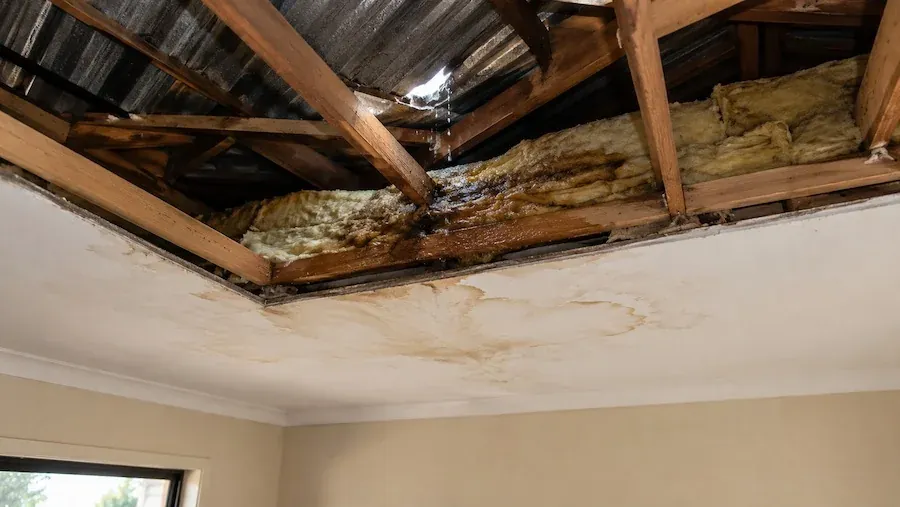
Air conditioning is the second most common source and the most often missed, because it leaks in summer when nobody is thinking about rain. Ducted systems have a condensate drain that blocks with dust and algae; when it does, the tray overflows straight onto the ceiling below the unit. Evaporative coolers on the roof leak from the pads, the pump or the drain. Ducts that have come apart in the roof space blow cold air onto a hot ceiling and condensation does the rest. A stain that appears or grows in summer, near where the indoor unit sits, is almost always this.
In two-storey homes, add plumbing. A shower tray or waterproofing that has failed, a bath waste, a loose connection under a vanity or a slow weep from a flexible hose will all show as a stain on the ceiling below. The stain in that case is usually directly under the bathroom or kitchen above and gets worse after someone uses it, which is a useful diagnostic. Overflowing gutters, a blocked downpipe, and a hot water system in the roof space round out the list.
- Cracked or slipped tiles, failed ridge capping, lifted flashings — roofer
- Blocked valley or box gutters — roofer or gutter cleaner
- Ducted aircon condensate overflow, evaporative cooler leaks — air conditioning technician
- Upstairs bathroom or kitchen in a two-storey home — plumber
- Roof-space hot water system or pipework — plumber
Who to call, and in what order
If you can see the stain clearly relates to the roof, a roofer is the first call. If it is summer, the stain is near the aircon unit and it has not rained, call your air conditioning company. If it is under an upstairs wet area, call a plumber. If you genuinely cannot tell, a ceiling fixer who is willing to get into the roof space can usually trace the wet back to its source, and will tell you which trade to call. We do not do roofing, plumbing or electrical work ourselves, but finding the source is part of looking at a water-damaged ceiling.
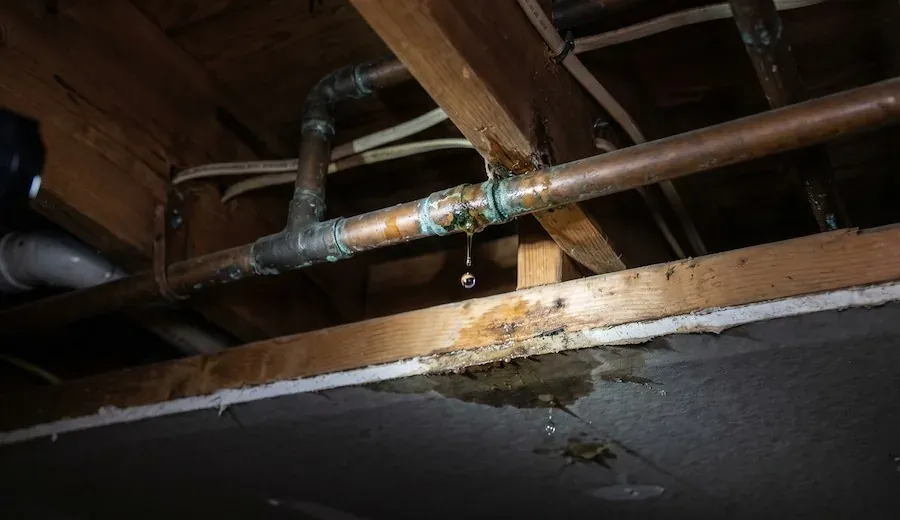
Once the source is fixed, let the ceiling dry out properly. In winter that can take a couple of weeks. A stain that is still damp to the touch, or that keeps spreading after the leak has supposedly been fixed, means either the leak is not actually fixed or there is more water sitting in the insulation above than you think. Wet insulation is heavy and holds moisture against the plaster for a long time; sometimes it has to come out.
Why painting over it does not work
The brown colour in a water stain is tannin and dirt leached out of the plaster, timber and insulation by the water. Ordinary ceiling paint does not seal it; the stain bleeds back through within weeks. A proper repair uses a stain-blocking sealer first, then a full coat over the area, and even then the surface has to be sound and dry for it to hold.
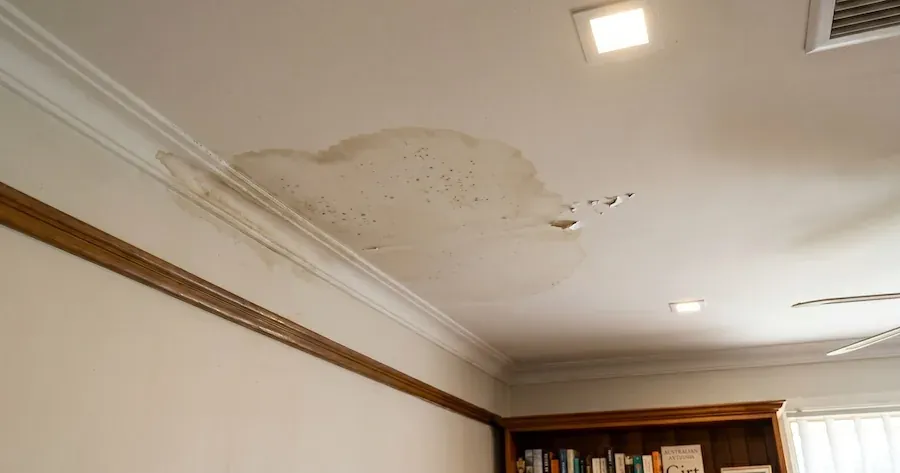
The more important reason not to paint over it is that a stain is often the only visible sign of damage you cannot see. Plaster that has been wet is softer and weaker than plaster that has not, even after it dries. On an older plasterglass ceiling, the straps and glue in the wet area have usually let go. On plasterboard, the paper face delaminates from the core and the sheet loses most of its strength. A stained ceiling is a ceiling with a weak spot in it, and painting over the stain does nothing about the weak spot.
Mould and the smell
A ceiling that has been wet for more than a day or two will usually grow mould on the back, in the insulation, or on the face. Black or green speckling on the surface around a stain is the obvious sign; a musty smell in a room with no visible mould often means it is growing on the roof-space side where you cannot see it. Surface mould on a sound ceiling can be treated and sealed. Mould that has got into the plaster or the insulation generally means that section comes out, because you cannot clean the inside of a plaster sheet.
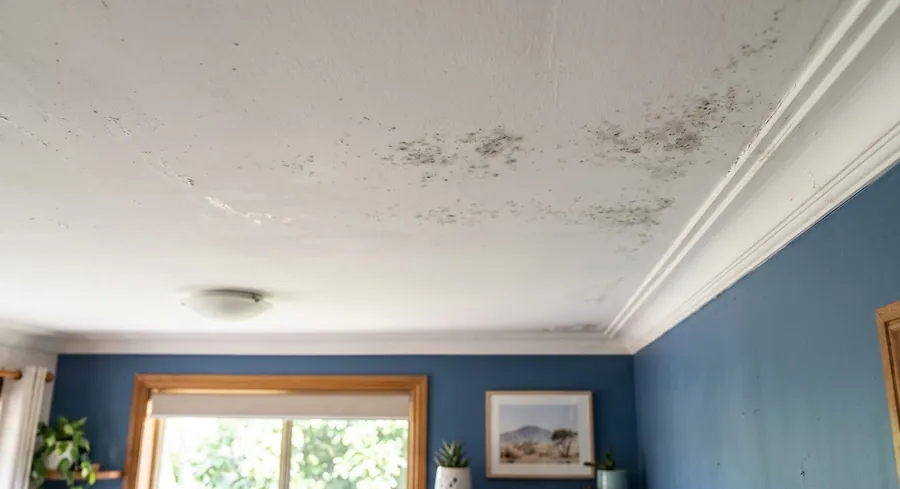
Perth's coastal suburbs and anywhere with poor roof ventilation are worse for this. A roof space that does not breathe stays humid long after the leak is fixed, and mould keeps going. If you are seeing repeated mould around a ceiling with no obvious leak, ventilation is worth a conversation.
When the stain is also a structural problem
Look at the stained area with a torch held flat against the ceiling. If it is still a flat plane, has no bulge, sounds solid when tapped and is dry, the ceiling can probably be sealed and repainted once the source is fixed. If any of the following are true, the ceiling itself needs repair, not just paint: the stained area bows down or has a bulge; it feels soft or spongy when pressed; it sounds hollow when tapped compared to the area around it; cracks have appeared through or around the stain; the cornice has pulled away nearby; or pieces of plaster have come down.
On older plasterglass, a wet section is usually cut out back to sound plaster and sound joists and replaced with new sheet, then set flush with the surrounding ceiling. On plasterboard the same applies, though the patch is often larger because the paper face delaminates further than the stain suggests. Either way the job is covered under water-damaged ceiling repair. If the ceiling has actually dropped or come down, that is an emergency ceiling repair.
Keep the evidence
Photograph the stain the day you notice it and again after any rain or hot spell. Note what was happening at the time: storm, aircon running, someone showering upstairs. Keep the roofer's or plumber's invoice. If you end up making an insurance claim, this is the material the insurer will ask for, and the guide on ceiling damage and home insurance explains why the distinction between a sudden event and a slow leak matters so much.