Matching Cornice and Decorative Plaster in Character Homes
Perth's older suburbs are full of homes where the cornice is not a strip of plasterboard trim but a run of moulded plaster with a profile you cannot buy off the shelf. Repairing it well is a different skill from fixing a flat ceiling. This guide explains how the profile is captured, how new work is made to disappear into old, and how to decide between patching a damaged section and replacing a whole run.
By Ceiling Fixers Perth · Updated 3 October 2026
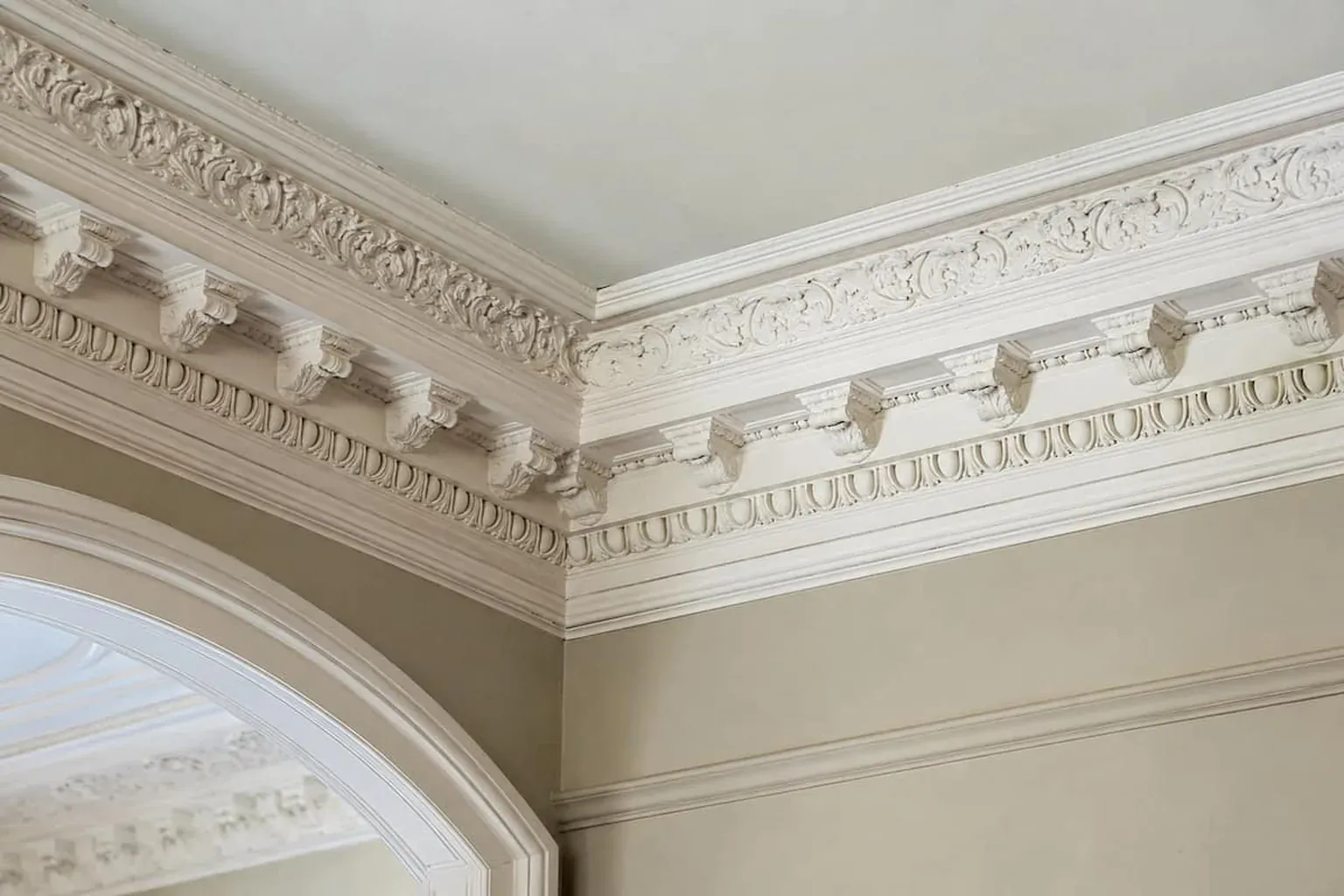
The profiles you find in Perth
Each era left its own cornice. Federation homes from around 1900 to 1915, common in Subiaco, Mount Lawley, Fremantle, Guildford and parts of Victoria Park, have deep, ornate cornices with repeating leaf, egg-and-dart or dentil patterns, often with a decorative ceiling rose and sometimes panel mouldings dividing the ceiling into fields. Californian bungalows from the 1920s tend to be heavier and simpler: broad coves, stepped profiles and plain but substantial roses. Inter-war and early post-war homes through to the 1950s simplify again, with stepped or ribbed profiles in smaller sections, and by the late 1950s and 60s you reach the plain coves and small ornate runs of the plasterglass era.
The material changes too. The oldest ceilings are lath and plaster: timber laths nailed to the joists with lime plaster pushed through and over them, with the cornice run in place or cast in sections and fixed up. Later work is fibrous plaster, cast in a workshop with hessian reinforcement and fixed to the wall and ceiling. Knowing which you are dealing with changes how the repair is approached, because lath and plaster is fragile in a different way from fibrous plaster and is often holding more history, and sometimes more dust, than it looks.
Why cornice fails in older homes
Cornice comes away for the same reasons ceilings sag: the plaster or adhesive bonding it to the wall and ceiling ages, the timber behind it moves, and water from the roof gets into it. In character homes there is an extra cause, which is the ceiling dropping away from the cornice. The cornice is fixed to the wall and stays put; the ceiling moves down a centimetre and tears away along the top edge. The visible result is a crack or gap along the top of the cornice, which owners often try to fill. Filling it does nothing if the ceiling is still moving, so a cornice repair in an older home almost always starts with a look at the ceiling it is attached to.
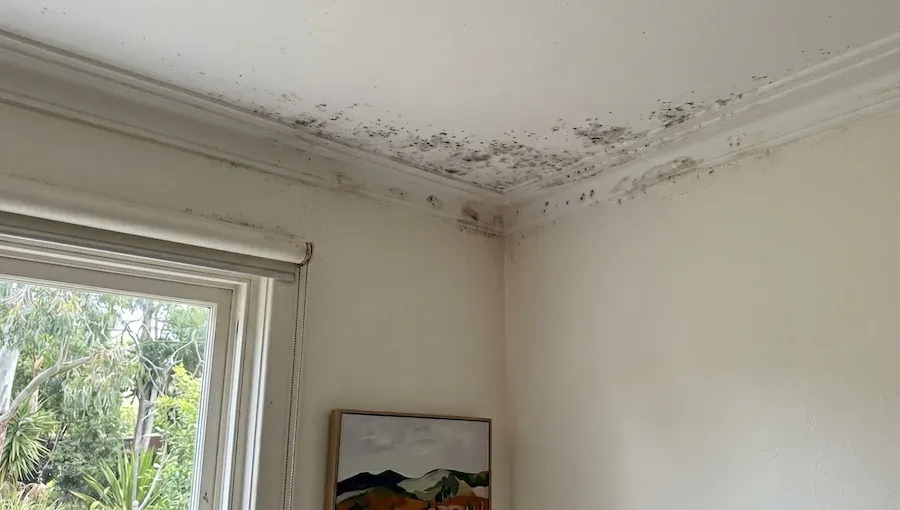
The other common damage is physical: sections knocked out during renovations, lost when a wall was removed, broken by a tradesperson's ladder, or crumbled where decades of damp have turned the plaster to chalk. Ceiling roses suffer when light fittings are changed repeatedly or a heavy fan is hung from them.
Capturing the profile
Everything starts with the profile. A template is taken from a sound section of the existing cornice, either by cutting a card or sheet-metal profile to match the cross-section, or by taking a flexible mould directly off the face of the moulding where the pattern is ornate and repeating. The template captures the exact shape of coves, fillets and steps; the mould captures the pattern. Both are checked against the original in several places, because cornice in old homes is not always identical from room to room, or even along one wall where two plasterers worked on the same house.
Where only a short length is missing, a mould taken from the adjacent original is the most reliable way to get a match. Where a whole room needs replacing and the profile is simple, a running mould can be made from the template and the cornice run fresh.
Running in place versus casting
Plain and stepped profiles can be run in place: a running mould shaped to the profile is drawn along the wall-ceiling junction through wet plaster, building up the cornice in a few passes until it is crisp. This is how a lot of the original work was done and it gives a seamless result, but it is slow, it is messy, and it needs the room empty and the plasterer to have the room for several passes with drying time between.
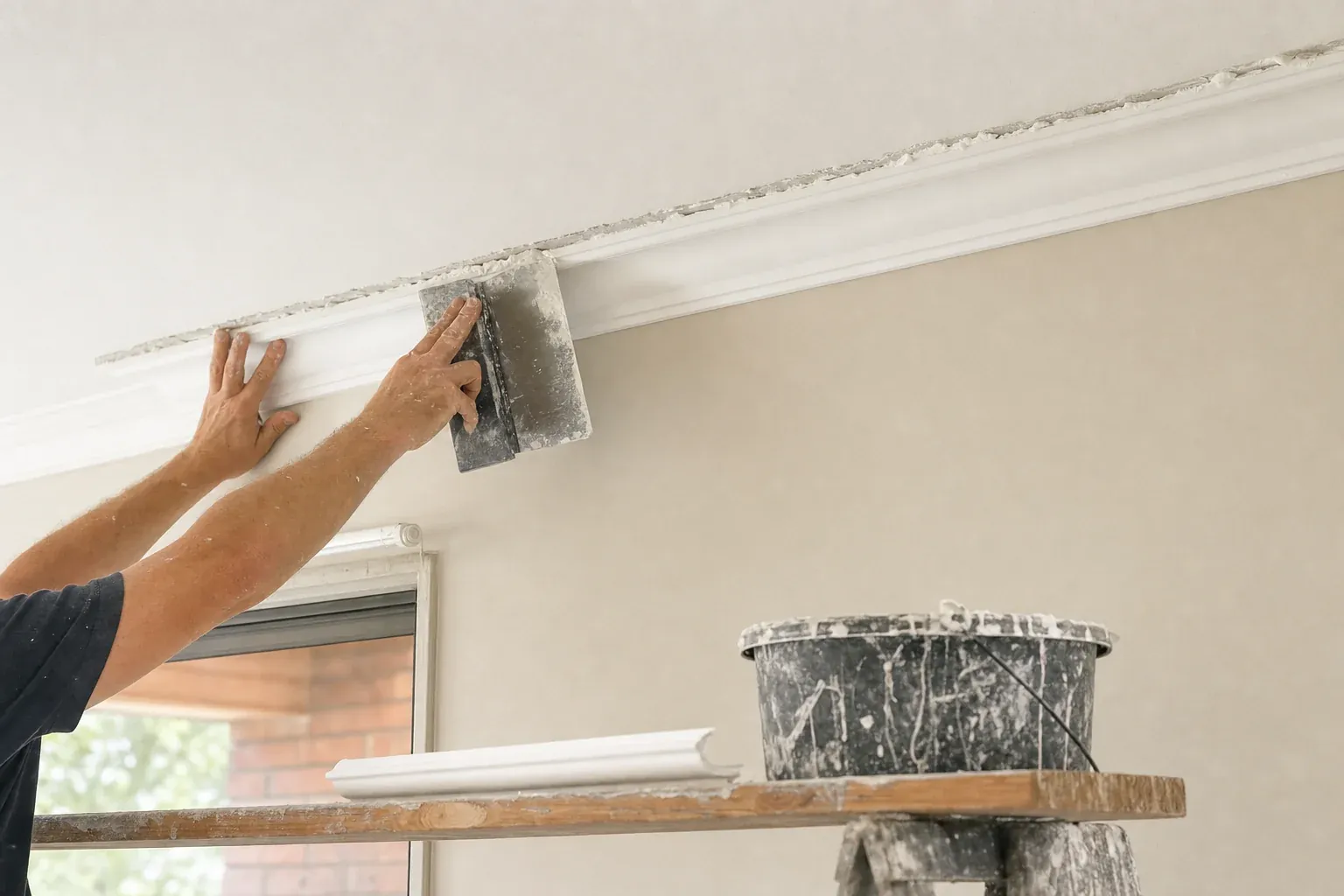
Ornate and repeating patterns are cast. The mould from the original is used to produce sections in fibrous plaster in a workshop, which are then cut to length, fixed up and the joins made good in place. Casting allows the pattern to be reproduced exactly and is generally how missing ornate sections, roses and panel mouldings are replaced. Most character-home cornice repair in Perth is a mix: the plain cove or steps run or patched in place, the ornate enrichment cast and applied.
Ceiling roses and panel mouldings
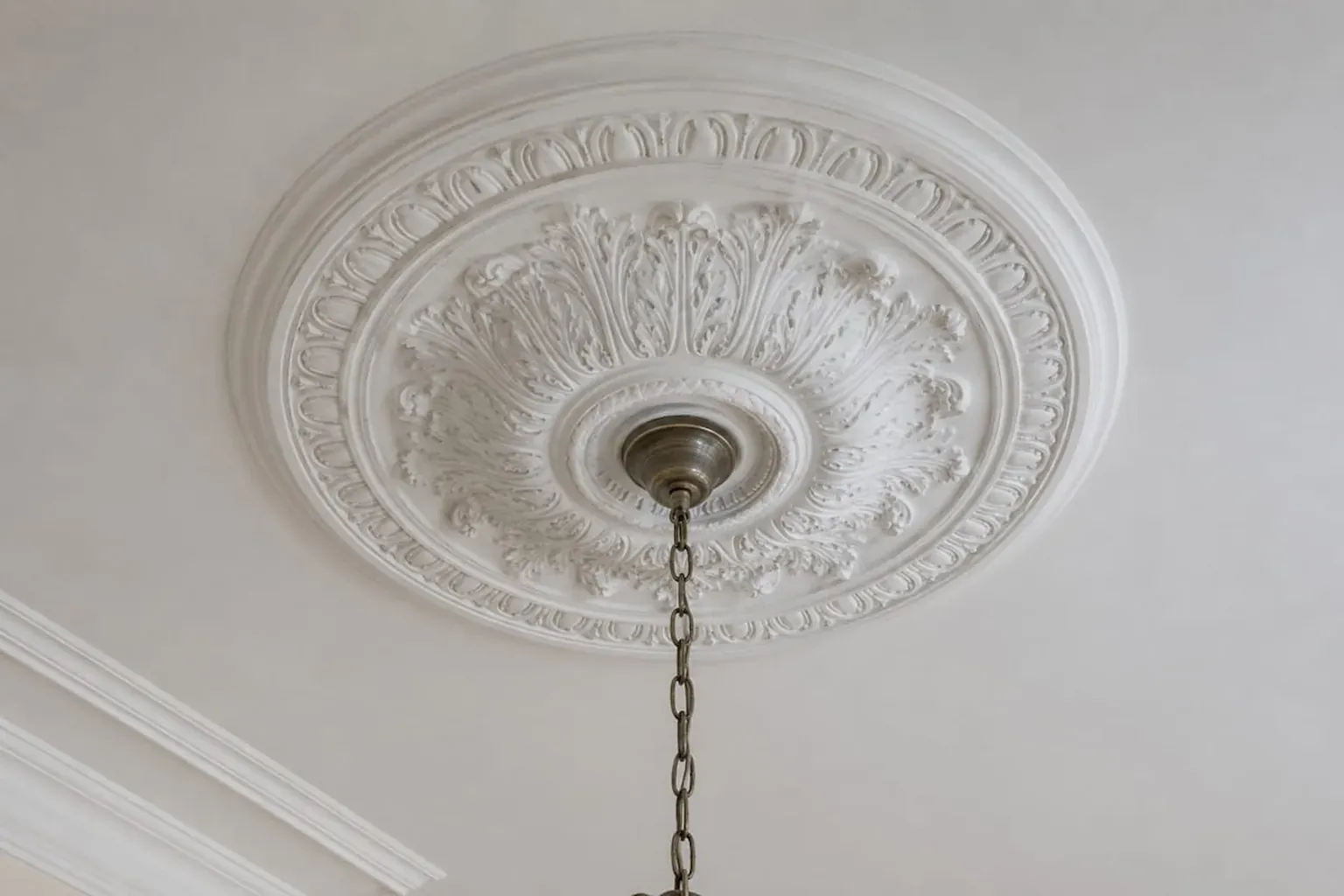
Roses are either repaired in place, where the damage is a few lost petals or a chipped edge, or taken down, moulded and recast where the damage is extensive or the rose has been drilled through too many times for new light fittings. A recast rose from a mould of the original is indistinguishable from it once painted. Where the original is gone entirely, a rose from the same era and of a similar scale is the honest option, and worth discussing with the owner rather than guessing.
Panel mouldings, the raised strips that divide a ceiling into fields, are handled the same way as cornice. The profile is captured, missing lengths are cast or run, and the mitres at the corners are cut and finished by hand. In rooms where the ceiling itself has to be replaced, the mouldings can sometimes be saved and refixed to the new ceiling, which is a lot of care for a modest cost in materials but makes an enormous difference to how the room reads afterwards.
Making new work disappear
Matching the profile is half the job. The other half is the finish. New plaster is whiter, smoother and sharper than ninety-year-old plaster that has been painted a dozen times. The joins between new and old are feathered out, any sharp edges on the new casting are softened to match the wear on the original, and the whole run is sealed and primed so that the new and old sections take paint the same way. In most cases the full run is repainted rather than just the patch, because a patch painted in isolation will always show.
Texture is the detail that catches people out. Old cornice has usually built up a skin of paint that fills the fine detail slightly; a crisp new casting next to it looks wrong even when the pattern is identical. Part of the finishing is bringing the new section to the same softness as the old, which is a judgement made on the ladder, not from a catalogue.
Patch or replace the run
A short damaged section in an otherwise sound run is patched: cast or run to match, fixed up, blended. When more than about a third of a run is damaged, when the original is chalky and crumbling along its length, when the profile has already been patched badly several times, or when the ceiling it sits on is being replaced anyway, replacing the whole run usually gives a better and more durable result. A new run from a mould of the original keeps the character of the room and avoids the patchwork look that comes from repairing the same cornice in stages over years.
In rooms where the ceiling is being replaced, the cornice is normally taken down carefully, used as the pattern for new work, and either refixed or replaced with matching cast sections. That is covered under cornice and decorative plaster repair and, for the ceiling itself, ceiling replacement.
Heritage considerations
Many of Perth's character suburbs have heritage areas or individual listings, and some councils have requirements about changes to significant interior features. We do the work sympathetically and keep the original profiles, but the responsibility for checking whether your property has heritage obligations, and for any approvals, sits with the owner. If your home is listed, check with your council before any decorative plaster is removed or replaced, and keep photos of the original for the record.
Homes of this age may also contain asbestos in later additions, in sheeting behind old cornice, or in ceiling patches done in the 1960s to 80s. Where there is any doubt, a sample is tested by a qualified asbestos assessor before anything is cut or disturbed.