Plasterglass & Plaster Ceiling Repairs in Perth
If your house went up between the late 1950s and the mid-1980s, the ceiling over your head is almost certainly plasterglass: heavy sheets of fibrous plaster hung from the joists with plaster and hessian. It is a good ceiling that was never designed to last forever in a Perth roof space. We re-fix, patch and replace plasterglass ceilings every week, and we will tell you straight which of those yours needs.
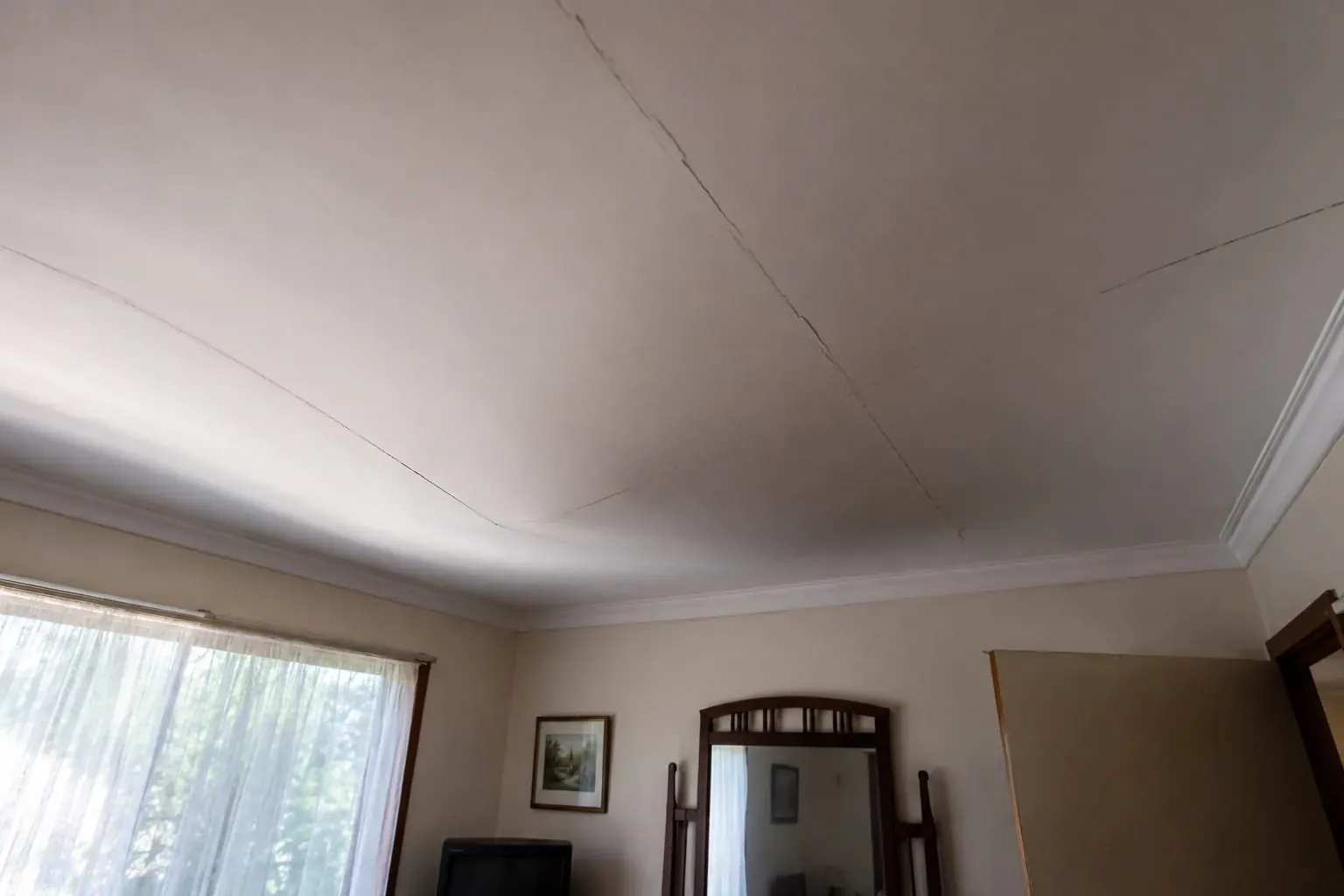
What you will usually notice first
A long, shallow sag between the walls
Plasterglass sheets are heavy. When the straps let go, the sheet hangs from whatever is left and bellies toward the middle of the room. Sight along the ceiling from the doorway: a dish you can see from the floor is a fixing problem, not a plaster problem.
Cracks that follow the sheet joins
Plasterglass was hung in sheets with the joins set flush, and that set is the weakest line. A crack that runs dead straight across the room and then turns a corner is tracing the sheet edges, and usually means the sheet on one side has dropped.
A gap or crack along the cornice
The cornice is bedded to the wall and stays put. When the ceiling drops it tears away from the cornice first, so a shadow line or hairline crack running the length of a wall at ceiling height is the earliest warning you will get.
Water marks on plaster that has gone soft
Fibrous plaster drinks water. A brown stain on plasterglass is rarely just a stain: press it gently with a broom handle and if it gives, the plaster has softened and the straps above it have probably let go as well.
Hollow sound, dimples over the fixings
Tap a section that is still held and it knocks short and dull. Tap one that has come off the joists and it rings hollow. A line of small dimples across the ceiling is the sheet pulling down over the original nails.
It has moved after someone was in the roof
Insulation, ducted air, solar, pest work. A strap that was hanging on by habit does not survive a boot or a dragged duct. If the ceiling changed within weeks of a trade being in the roof space, say so when you call.
The way the job actually gets done
Identify what you have first
Plasterglass, plasterboard and the odd lath-and-plaster or fibre-cement ceiling all repair differently. The age of the house and a couple of photos usually settle it, and many jobs are quoted from those. When they do not, we check the thickness at a light fitting or manhole, the join pattern and the way the cornice was set, and get into the roof space to look at the straps, the glue daubs and the timber. Older textured coatings are left alone until we are sure what they are.
Re-fix and re-strap where the sheet is sound
Most plasterglass that has sagged is still a sound sheet on failed fixings. It is propped back to the joists in stages, screwed off through the face with washers, and new straps are laid over the joists from the roof space so it is held from above as well as below. Our ceiling re-strapping page covers that job on its own.
Replace a section, keep the rest
Where one sheet has been soaked, broken through or deformed, that section is cut out to the joists and replaced with plasterboard. Plasterboard is thinner than plasterglass, so the new piece is packed off the joists to bring its face level with the old ceiling before the join is taped, set and feathered wide. Done properly, a section replacement under an original cornice is invisible once painted.
Full replacement when that is the honest answer
A ceiling that has sagged into a permanent curve, been wet more than once, or carries a patchwork of past repairs is better off coming down. It goes back as a new plasterboard ceiling on the existing joists with new or re-bedded cornice. We quote that as a separate line beside the repair price so the comparison is in front of you.
What the work looks like
-

Brick-and-tile streets like this are plasterglass country: most of these homes were built with fibrous plaster ceilings -
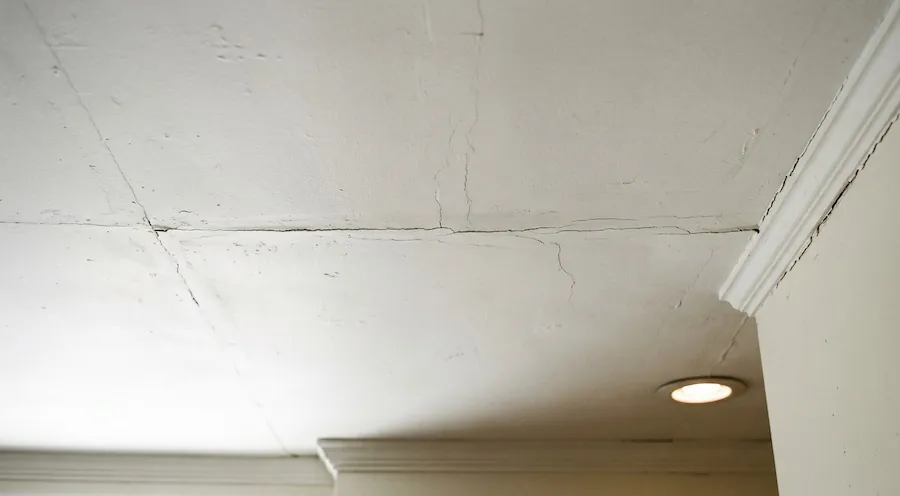
Cracks tracing the sheet joins and turning at the cornice: the sheet on one side has started to drop -
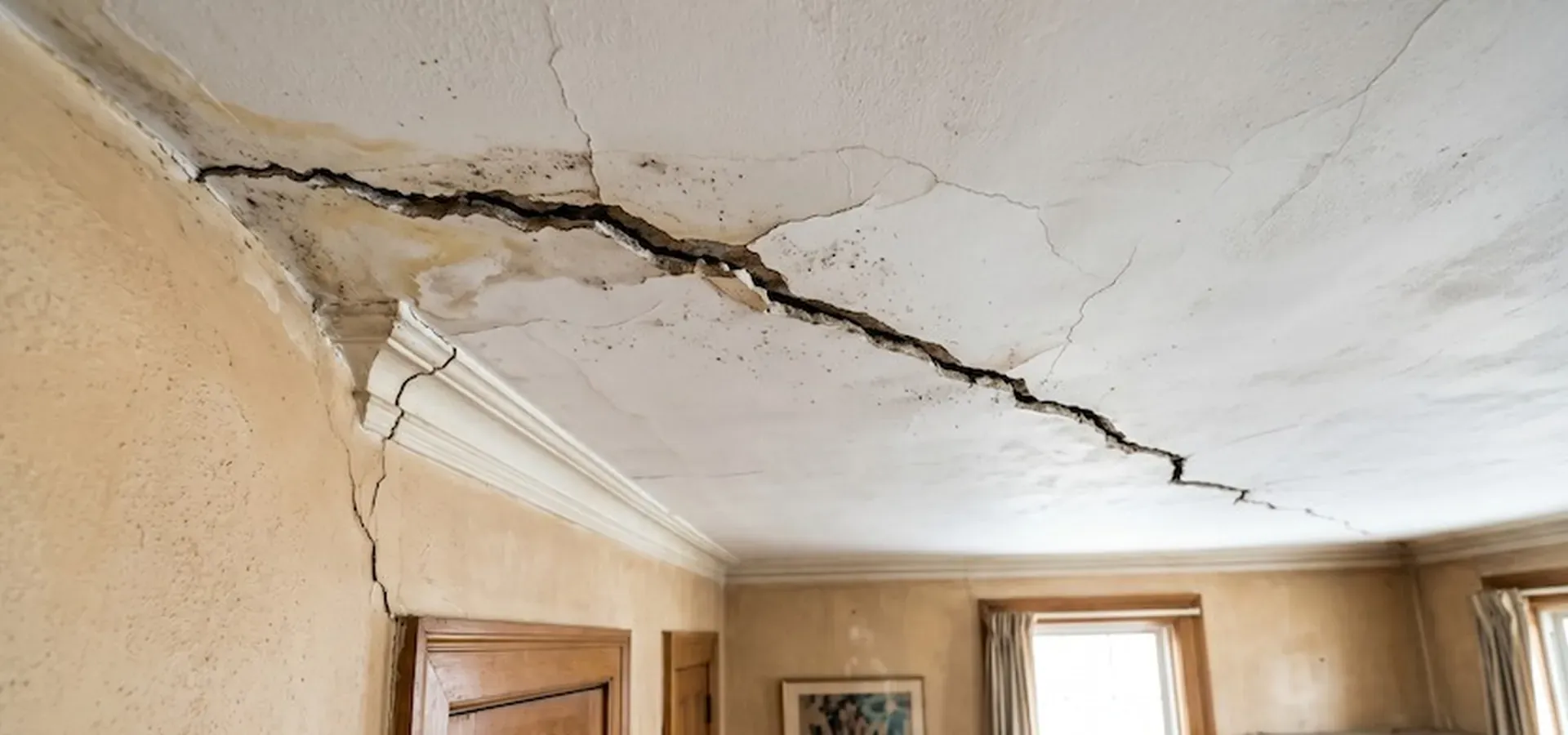
Water, mould and an open crack along the cornice line: this section is past re-fixing and gets cut out -
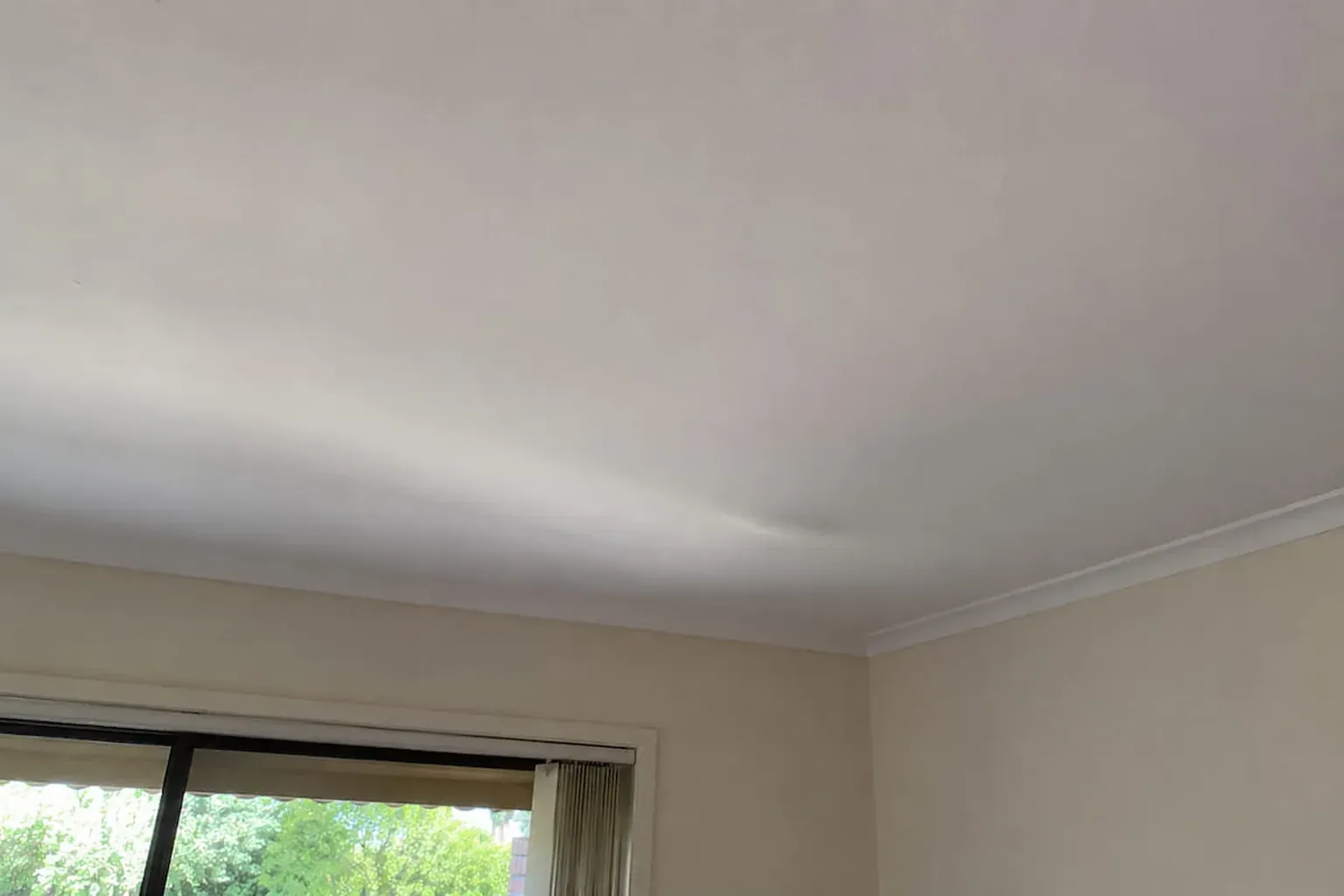
Shallow sag with the sheet still sound: re-fix and re-strap territory -
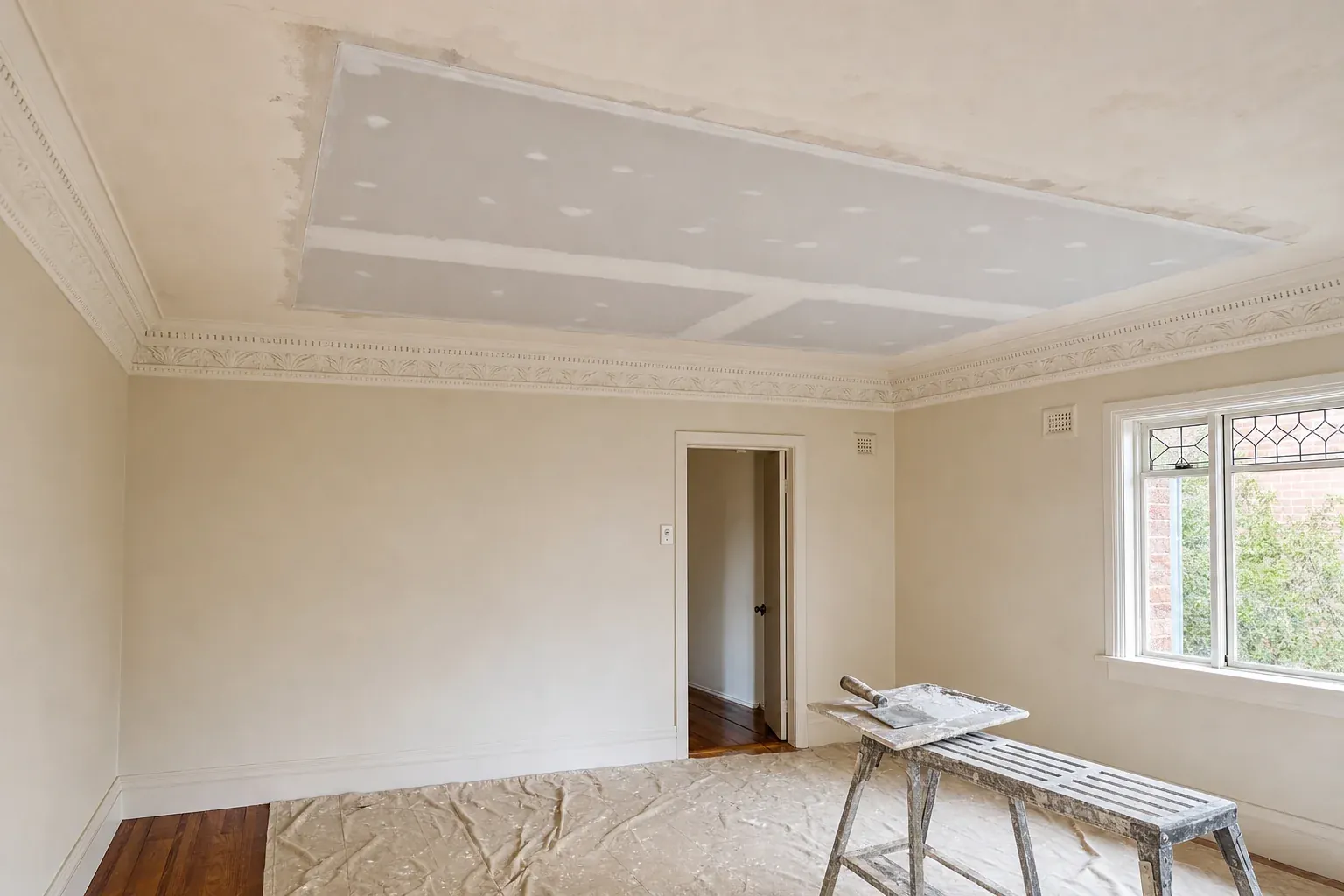
New section fitted under an original ornate cornice and set, before skim and paint -

Repaired plasterglass ceiling painted and flat again under raking light from the window
From first call to paint-ready
-
Call or send a photo
Tell us the age of the house and what you can see. A photo from the doorway with the light on tells us whether it looks like fixings, water or both.
-
Quote from photos, or inspect when it needs it
Many plasterglass jobs can be quoted from your photos and a description. Where the drop, the water or the age of the ceiling calls for it, we come out, measure, and get into the roof space to check the straps, the timber and anything resting on the ceiling that should not be.
-
Written quote with the options side by side
Re-fix and re-strap, section replacement, or full replacement, each itemised, so the choice is yours and not ours.
-
The repair
Furniture covered, ceiling propped and re-fixed or the damaged section cut out and re-sheeted, straps renewed from above, cornice re-bedded where it has pulled away.
-
Set, sand, paint-ready
Screw heads, joins and cracks are set in several coats and sanded flush, with a skim where the surface needs blending. You get a flat ceiling ready for your painter.
What moves the price, and why some jobs need a look first
Many jobs can be quoted from your photos and a description. Others are a different job once someone is in the roof space, which is when we come and look first. These are the things that move the price for plasterglass ceilings.
Call 0485 084 943- Floor area of the ceiling and how far it has dropped
- Whether the sheet is sound enough to re-fix or a section has to come out
- Roof-space access: manhole size, roof pitch and how much insulation has to be lifted and relaid
- Condition of the original straps and whether the whole ceiling or only part needs re-strapping
- Water or termite damage found above the ceiling
- Surface finish: smooth set plaster blends easily, textured or swirled finishes take more work
- Cornice profile and whether it needs re-bedding, patching or replacing along the same wall
- Ceiling height, and the number of rooms done in the one visit
Plasterglass Ceilings: your questions
What is a plasterglass ceiling?
How do I know if my ceiling is plasterglass or plasterboard?
Can a plasterglass ceiling be repaired, or does it have to be replaced?
Can you patch plasterglass with plasterboard?
Is a plasterglass ceiling worth keeping?
Could the ceiling contain asbestos?
Get a Quote
Tell us what the ceiling is doing and where you are. We will call you back to talk it through and arrange a time to look at it.
Prefer to talk? Call 0485 084 943
Thanks, we have your details
We will call you back during business hours to talk about the ceiling. If it is urgent, ring us now on 0485 084 943.
Related services
Read before you call
Not sure what the ceiling is doing?
Describe it over the phone and we will tell you whether it needs looking at this week or can wait. Perth-wide, Monday to Friday.