Why Ceilings Sag in Perth Homes
Ask anyone who has worked in Perth roof spaces for long enough and they will tell you the same thing: sagging ceilings here are not bad luck, they are a predictable result of how a generation of homes was built and how our climate treats them. This guide explains what is actually holding your ceiling up, why it stops working, and what tends to tip a borderline ceiling over the edge.
By Ceiling Fixers Perth · Updated 3 October 2026
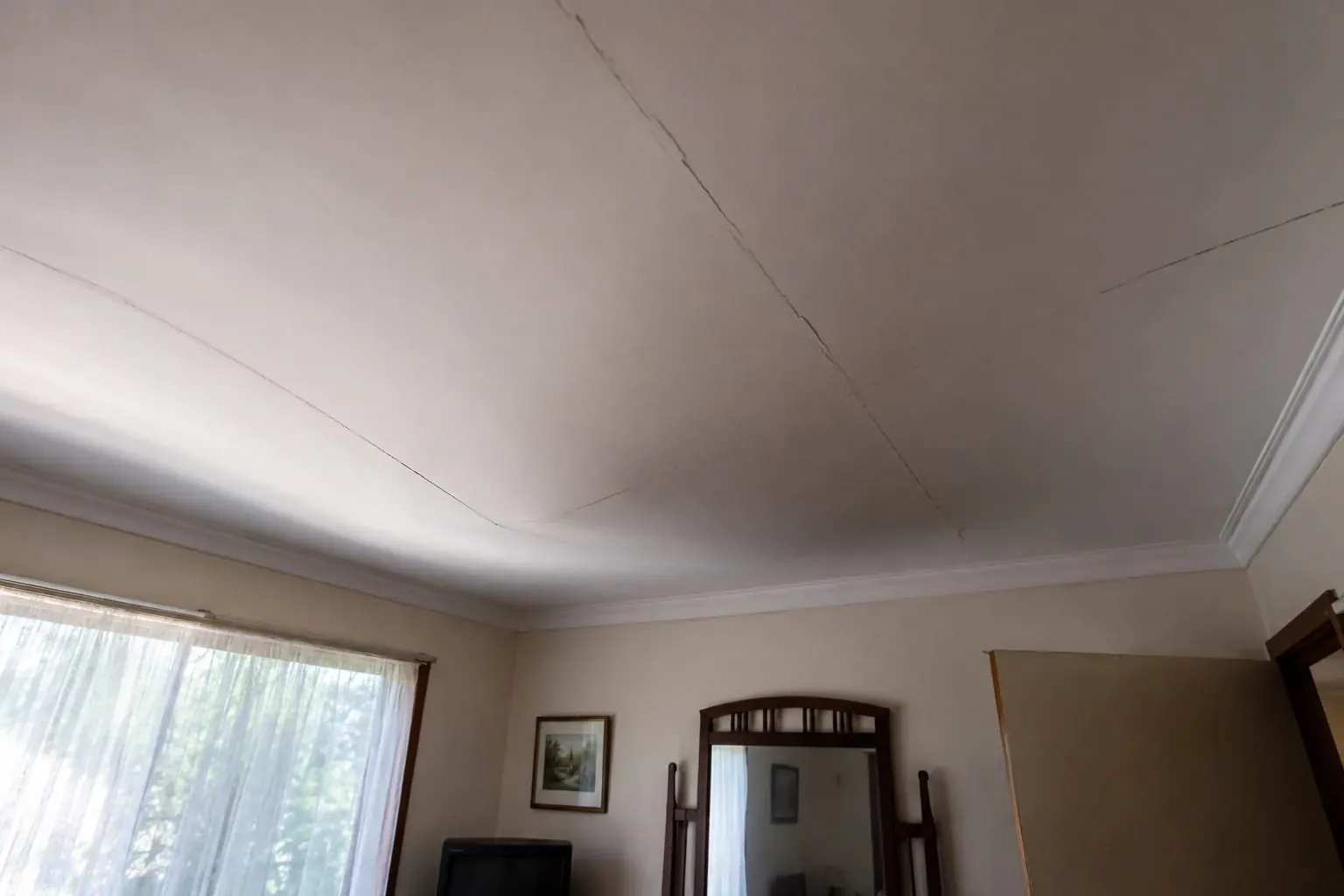
What a Perth plasterglass ceiling actually is
From roughly the late 1950s to the mid-1980s, the standard ceiling in a Perth brick-and-tile home was plasterglass, also called fibrous plaster. Sheets were cast in a factory from gypsum plaster reinforced with sisal or hessian fibre, usually around 10 to 13 millimetres thick and heavy for their size. On site they were lifted up against the ceiling joists, held with a few nails, and then fixed properly from above.
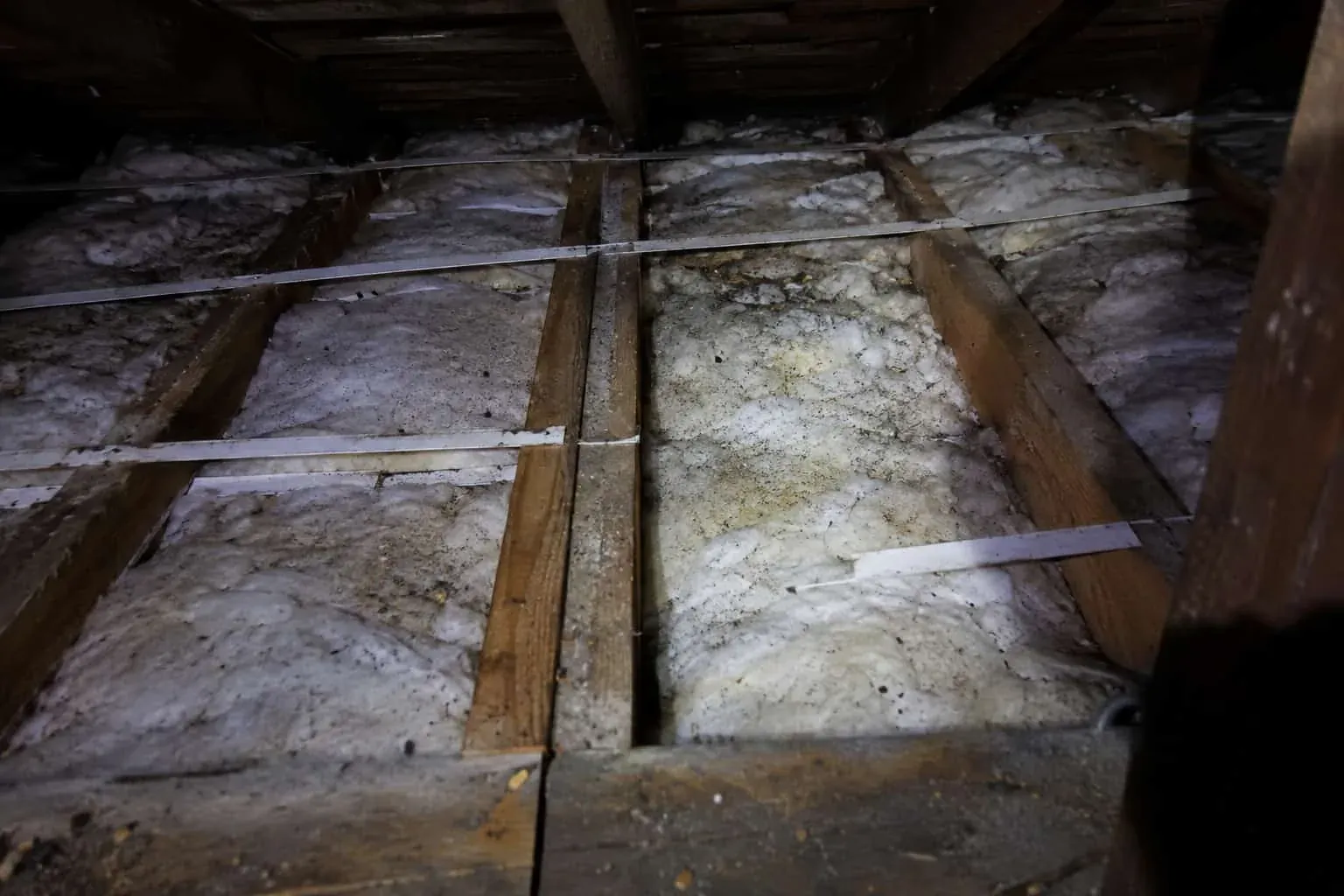
That fixing from above is the part most homeowners never see. The installer climbed into the roof space with a bucket of plaster and strips of hessian, dipped the hessian in plaster, and draped it over the joist and down onto the back of the sheet on both sides. These are the straps. Between the straps, daubs of plaster-based adhesive were pressed between joist and sheet. When it set, the ceiling was effectively hung from the joists by dozens of small plaster ties. It was a good system and most of those ceilings are still up fifty years later. But every one of those ties is a point of failure with a finite life.
Heat is the main enemy
A Perth roof space under terracotta or concrete tiles can sit well above fifty degrees for most of a summer afternoon, and it does that for months every year, for decades. Plaster and plaster adhesive do not like it. The straps dry out, go brittle and lose their bond to the back of the sheet. The glue daubs shrink, crack and eventually separate cleanly from either the joist or the plaster. Nothing dramatic happens on any given day. It is the sum of forty or fifty summers.
The heat also works on the timber. Ceiling joists in these homes are usually seasoned hardwood or pine, and across decades of heating and cooling they shrink, twist and move slightly against the fixings. A strap that was tight when it was made can end up with a few millimetres of play in it, which is enough to let the sheet drop and crack along the nearest join.
Moisture finishes what heat started
Plaster is hygroscopic. It takes up moisture from the air and gives it back as the air dries. In coastal suburbs, where humidity sits high through the warmer months, that cycle runs harder. North of the river and along the coast from Fremantle to Two Rocks, ceilings tend to show their age slightly earlier than the same ceilings further inland, and the plaster is often softer when you get a screw into it.
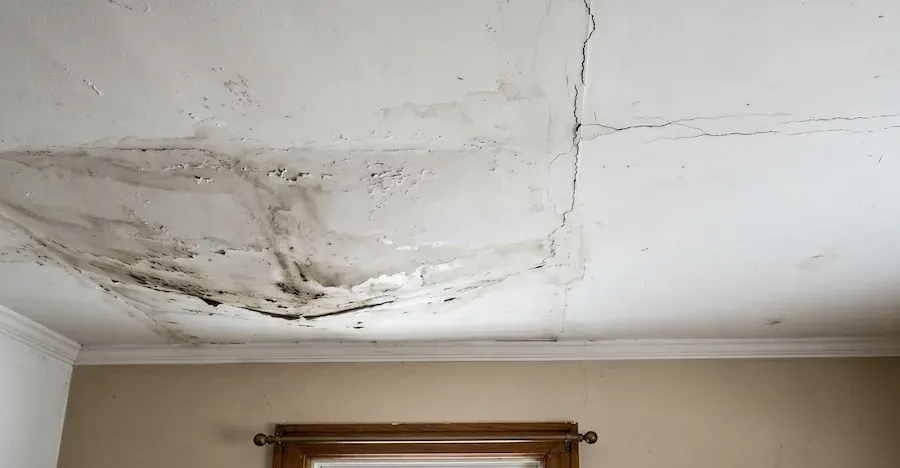
Actual water is worse again. A cracked tile, a blocked valley gutter in a winter storm, a slow leak from an evaporative cooler or a condensate drain from a ducted air conditioner can wet a section of ceiling repeatedly over years without ever leaving a dramatic stain. Each wetting softens the plaster around the fixings and weakens the straps. A ceiling that has been wet, dried and wet again is the one most likely to come down in one piece rather than sag gradually, which is why a water stain on an old ceiling should never be ignored. The guide on what to do about a ceiling water stain covers that in detail.
Original workmanship was not always good
Perth went through building booms in the 1960s and again in the 1970s, and not every ceiling fixer was careful or well-supplied. In the roof spaces of these homes you will find sheets with half the straps they should have, straps that are too thin or were made with a plaster mix that never fully bonded, glue daubs placed on only one side of the joist, and sheets whose joins land between joists with nothing supporting them. Those ceilings were always going to go first.
You also find later work that undermined good original fixing. Renovations that cut a hole for a new light or fan without re-supporting the cut edge, ceilings that have been painted repeatedly with heavy coatings that add weight, and spans that were opened up when a wall came out during a kitchen renovation, leaving the ceiling sheet spanning further than it was designed to.
The things that tip a tired ceiling over the edge
Most sagging ceilings have been slowly losing fixings for years. What brings them to the owner's attention is usually a trigger. The most common ones are work in the roof space: insulation installers, air conditioning ducting, solar panel electricians, pest controllers and antenna technicians all walk around up there, and if someone puts their weight on a sheet or drags a duct across the straps, an old ceiling can let go in a day. Any time you have work done in the roof, it is worth looking at the ceilings afterwards.
Added weight is the second trigger. Thick batt insulation laid directly onto old plasterglass, a whirlybird or exhaust fan cut in without support, or a ducted system with the drops resting on the ceiling all add load to fixings that were never designed for it. Vibration from nearby demolition, road works, or even heavy doors slamming in a house where the ceiling is already marginal can do it too.
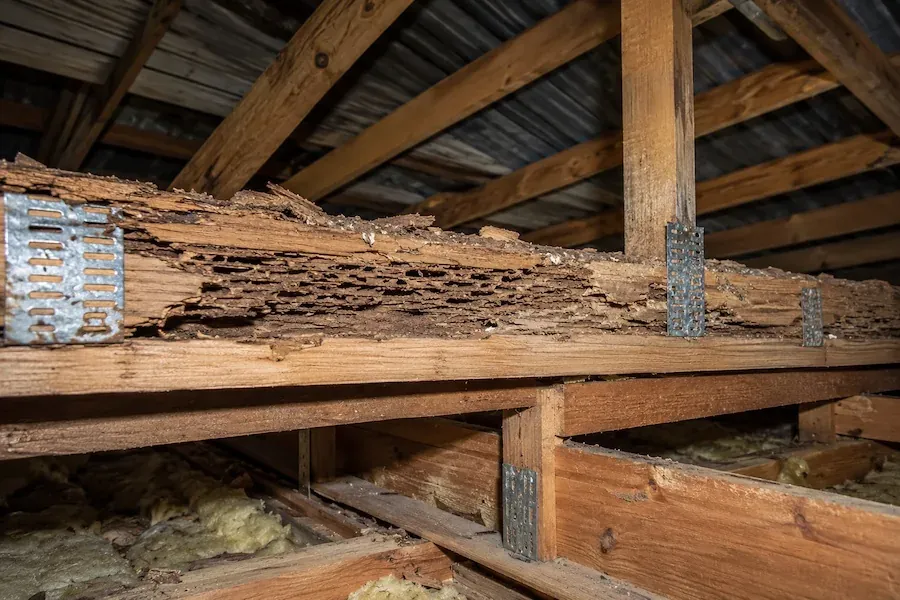
Termites and borers belong on the list. They attack the joists rather than the plaster, and a joist that has been hollowed out will sag under the weight of the ceiling hanging from it. If a ceiling is sagging in a long line that follows one joist rather than bellying in the middle of the span, that is what we look for first.
- Trades walking in the roof space: insulation, aircon, solar, pest, antenna
- Added weight: insulation on the sheet, fans, ducting resting on the ceiling
- Heavy repeated painting or textured coatings
- Walls removed during renovation, increasing the span
- Termite or borer damage to the joists
- Any water event, even a minor one
What about plasterboard?
Homes built from the mid-1980s onwards mostly have plasterboard ceilings: a gypsum core between paper faces, screwed and glued to the joists or to steel battens. It is lighter and the fixing method is far more forgiving than plasterglass, which is why sag is much less common in newer homes. When plasterboard does sag it is almost always because it has been wet, because the joists or battens are further apart than the sheet is rated for, or because someone has loaded it from above.
Plasterboard has its own failure modes. Screws that were driven too deep and broke the paper face will pop out as the timber moves, leaving a line of small bumps. Joins that were taped with the wrong product or not enough compound will crack. Those are cosmetic and are covered under ceiling crack repair. But a plasterboard ceiling that is actually drooping between fixings needs looking at the same way an old plasterglass one does.
What this means if you own an older Perth home
If your house was built before about 1985 and still has its original ceilings, assume the fixings are near the end of their life. That is not cause for panic. A great many of these ceilings can be re-fixed from above with new fixings and fresh strapping and will go another few decades. The point is to catch it while re-fixing is still an option, because once a sheet has dropped far enough to crack through, or has been wet, replacing the section is the only sensible fix.
Check the ceilings after any roof work. Keep gutters and valleys clear before winter. Do not let anyone lay insulation directly on an old plasterglass ceiling without checking its condition first. And if you see a crack along the cornice or a dip in the middle of a room, get it looked at while it is a sagging ceiling repair rather than a replacement.